
Communist Albania tours offer specialist travel companies an opportunity to develop a meaningful European historical journey beyond conventional sightseeing. Albania’s recent past can be interpreted through surveillance museums, political prisons, internment memorials, military landscapes, religious heritage and personal testimony.
The strongest programmes do not treat these places as isolated attractions. Instead, they connect them through a coherent narrative about dictatorship, resistance, remembrance and freedom.
For tour operators, developing this type of experience requires more than a list of museums. It demands careful pacing, specialist guiding, realistic routing and respectful coordination with local institutions.
RakiYa Travel’s eight-day programme, The Forbidden Albania – Behind the Iron Curtain: Dictatorship, Resistance & Freedom, provides a practical example of how a specialist communist history tour can be developed for the international travel trade.
Why Albania Works for a Specialist Communist History Tour
Albania offers a remarkable concentration of sites relating to twentieth-century European political history. Within a single itinerary, groups can examine state surveillance, political repression, internment, forced labour, official atheism, Cold War militarisation and the consequences of international isolation.
The value lies in the relationship between these sites.
A surveillance museum in Tirana introduces the mechanisms of political control. An internment memorial in Tepelenë shows how punishment extended to entire families. A former prison such as Spaç reveals forced labour and organised resistance. Military tunnels and restricted settlements demonstrate how the state shaped both the landscape and everyday life.
For cultural tour operators, history specialists, educational travel organisers and thematic groups, this creates a product that can be differentiated from conventional Balkan sightseeing programmes.
However, the subject requires sensitivity. Historical interpretation must preserve human dignity and avoid presenting political suffering as entertainment.
From Surveillance to Resistance: Building a Coherent Historical Narrative
A successful communist Albania itinerary should move through a sequence of historical themes rather than simply follow a geographical route.
Tirana provides an introduction to surveillance, political privilege and everyday life under dictatorship.
Tepelenë develops the theme of collective punishment and internment.
Gjirokastër and the southern coast reveal Albania’s Cold War militarisation, changing international alliances and preparation for possible external attack.
Further north, Spaç brings the programme towards political imprisonment, forced labour and resistance. Shkodër expands the narrative to religious persecution, while a carefully coordinated testimony session can connect historical sites with lived experience.
The final emphasis should be on freedom and contemporary Albania, allowing visitors to understand both the legacy of dictatorship and the transformation of the country.
This progression gives the itinerary a clear educational structure: surveillance, repression, internment, militarisation, resistance, remembrance and freedom.
The Key Places That Shape the Journey
Tirana: Surveillance, Privilege and Everyday Control
Tirana provides a strong starting point because it combines historical interpretation with contemporary urban life.
The Postbllok Memorial introduces political imprisonment and remembrance. The former Blloku district helps explain the privileges enjoyed by Albania’s communist elite and the separation between political leadership and the wider population.
Two particularly important institutions are the House of Leaves and Bunk’Art 2.
The House of Leaves, formerly associated with the technical surveillance operations of the Sigurimi secret police, provides insight into the monitoring of private communications and daily life.
Bunk’Art 2 explores the machinery of political repression, including the activities of the Ministry of Internal Affairs and the state security apparatus.
RakiYa’s signature “Raki & Stories” experience at Komiteti adds a human dimension. Through guided conversation and contemporary Albanian hospitality, visitors can explore the difference between life under dictatorship and the freedoms experienced today.
This combination is particularly suitable for cultural operators, educational groups and travellers who need historical context before visiting more remote sites.
Tepelenë: Internment and Collective Punishment
The Tepelenë Internment Camp Memorial introduces the system of internment and the regime’s definition of the “class enemy”.
Families could be punished because of political associations, social background or perceived disloyalty. Women, children and elderly people were among those affected by forced displacement and severe living conditions.
For history-focused groups, Tepelenë shifts attention from state institutions to the individual and family experiences of persecution.
RakiYa’s programme includes a simple floral tribute and moment of silence. These activities are conducted respectfully, with appropriate historical context rather than theatrical presentation.
Gjirokastër: The Cold War State and Its Priorities
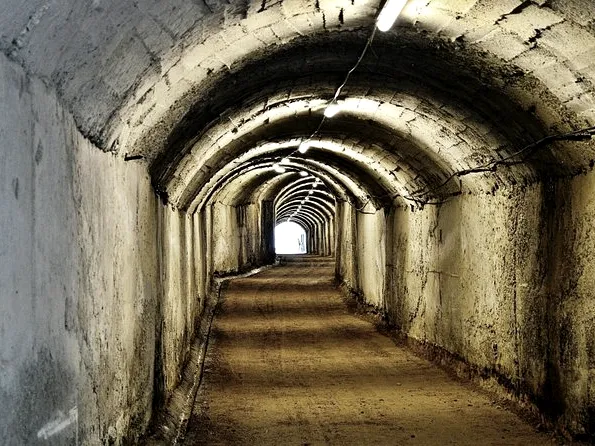
The Cold War Tunnel in Gjirokastër illustrates the scale of the communist state’s preparation for possible foreign attack.
Built as an underground shelter for local political authorities, the tunnel provides a strong contrast between military expenditure and the restrictions, shortages and repression experienced by ordinary citizens.
The experience becomes more meaningful when placed in the wider context of Albania’s Cold War history, including the country’s changing relations with Yugoslavia, the Soviet Union and China.
Beyond the tunnel, historic Gjirokastër offers an opportunity to combine communist-era interpretation with the architectural and cultural heritage of one of Albania’s UNESCO-listed cities.
This combination is particularly relevant for Cold War specialists, military-history groups and cultural operators seeking broader historical context.
Porto Palermo and Palasë: Alliances, Isolation and Bunkerisation
The southern Albanian coast contains important reminders of the country’s militarisation during the Cold War.
Near Porto Palermo, a privately arranged coastal experience provides views towards the former submarine tunnel and opportunities to discuss Albania’s changing military alliances.
The interpretation can explore the country’s relationships with Yugoslavia, the Soviet Union and China before its eventual political isolation.
At Palasë, the Big Bunker complex and nearby mountain tunnel provide visible evidence of the defensive infrastructure constructed during the communist period.
These locations demonstrate how military priorities shaped remote landscapes and coastal environments.
Visits must be arranged according to current access permissions, safety conditions and the physical abilities of the group. Some areas involve uneven ground and are unsuitable for travellers with limited mobility.
Sazan Island: Life Inside a Restricted Military Settlement
Sazan Island is especially relevant for specialist historical programmes.
Former military barracks, officers’ housing, defensive installations, bunkers and gun positions help visitors understand the realities of living and working inside a restricted military environment.
Rather than presenting Sazan merely as a collection of abandoned structures, specialist guides can explore the connection between military secrecy, daily life, coastal defence and Albania’s strategic anxieties.
Access depends on boat operations, weather, sea conditions and relevant permissions. As a result, Sazan excursions should always be accompanied by operational contingency plans.
The experience is particularly suitable for smaller specialist groups interested in Cold War history, military architecture and field interpretation.
Why Spaç Changes the Character of the Tour
Spaç is one of the most significant historical and emotional elements of a communist Albania tour.
The former political prison and forced-labour site brings together the themes of imprisonment, mining labour, isolation, punishment and resistance.
The Spaç Revolt of 21–23 May 1973 is central to the site’s interpretation. Political prisoners rebelled against the authorities and raised an Albanian flag without the communist star, making the event an important symbol of opposition to the dictatorship.
A visit should begin with historical preparation. Guides need to explain the prison system, forced labour and the circumstances of the revolt before the group explores the site.
RakiYa’s itinerary includes a moment of remembrance, allowing participants to reflect on the experiences of prisoners and those who resisted.
Spaç is best suited to specialist history operators, educational groups and travellers comfortable with remote locations and challenging terrain.
The Importance of Human Testimony and Remembrance
Historical locations provide essential context, but personal testimony can give visitors a deeper understanding of the experiences behind those sites.
Subject to availability, a “Voices of Freedom” session may involve a former political prisoner, survivor, family member or representative of an institution preserving the memory of communist persecution.
These sessions require sensitive preparation, respectful questions and appropriate coordination.
Testimony should never be presented as entertainment or guaranteed before the relevant participant has confirmed availability.
For tour operators, this is an area in which an experienced local DMC can provide particular value. Relationships with memory institutions and potential speakers require careful communication, local knowledge and contingency planning.
How to Balance Difficult History With Contemporary Albania
A strong historical itinerary should not leave visitors with an understanding of Albania defined exclusively by dictatorship and repression.
The programme should deliberately contrast the communist era with contemporary Albanian society.
Modern Tirana, the transformation of the Blloku district and conversations with local entrepreneurs help travellers understand the country’s social and economic changes.
Food, hospitality and landscapes also provide valuable context.
A visit to Mrizi i Zanave, for example, can connect contemporary agritourism, regional food production and local entrepreneurship with the wider story of Albania’s transformation.
Raki & Stories offers another opportunity to combine historical conversation with present-day social life.
These experiences help prevent the itinerary from becoming excessively museum-focused or emotionally exhausting.
For cultural tour operators, the objective is to present Albania as a country whose difficult history remains important, but whose identity extends far beyond that period.
Operational Considerations for Tour Operators
Communist Albania tours require more preparation than conventional city-and-coast itineraries.
Small groups are generally easier to coordinate at memorial sites, remote historical locations, tunnels and testimony sessions.
Specialist guiding is essential. The guide should understand Albania’s twentieth-century political history and be able to adapt interpretation to the group’s background, interests and language.
Routing also requires particular attention. Programmes combining Tirana, southern Albania, Spaç and Shkodër involve substantial road transfers and different terrain conditions.
Transportation must be selected according to road access, group size and current operating conditions.
Travellers should receive practical advice on suitable footwear, uneven surfaces, stairs, tunnels, weather conditions and physical requirements.
Boat experiences around Porto Palermo and Sazan Island depend on marine conditions and must include alternatives when required.
Access to abandoned military structures and historic prison sites must always be legal and safe. Permission requirements, visitor access, opening arrangements and operational conditions can change.
Operators planning larger or more varied programmes can also consult RakiYa’s guide to planning Albania group tours, covering accommodation, transport, group formats and other logistical considerations.
A reliable local DMC helps coordinate accommodation, vehicles, specialist guides, museums, boats, suppliers and contingency planning while maintaining realistic daily pacing.
Who Is This Product Suitable For?
Communist Albania tours are particularly relevant for:
- Specialist historical tour operators
- Cultural and escorted tour companies
- Educational and academic travel organisers
- Cold War and twentieth-century history enthusiasts
- Military history and architecture groups
- Historical associations and thematic societies
- Small-group organisers and specialist travel agencies
- Mature cultural travellers interested in historical interpretation
The product is less suitable for high-volume sightseeing programmes, travellers requiring minimal walking or groups seeking primarily light entertainment.
Clear pre-departure information is essential. The journey includes serious historical subjects, extended transfers, remote locations and moments that require reflection and sensitivity.
A Practical RakiYa Travel Example: The Forbidden Albania
The Forbidden Albania – Behind the Iron Curtain: Dictatorship, Resistance & Freedom is an eight-day, seven-night specialist historical journey designed around the human experience of dictatorship, resistance, remembrance and freedom.
The itinerary follows a route through Tirana, Tepelenë, Gjirokastër, Porto Palermo, Palasë, Vlorë, Sazan, Spaç, Shkodër and back to Tirana.
It combines specialist interpretation, historical sites, carefully selected experiences and opportunities for reflection.
The programme can serve two different commercial purposes for travel trade partners.
Scheduled Small-Group Departure
A departure is scheduled for 18–25 September 2027 in English, subject to the applicable minimum participant requirement and confirmation of operating status.
Travel agencies can enquire about placing individual clients or small bookings on this departure, subject to availability and booking conditions.
Departure status may change as bookings develop. Partners should consult RakiYa’s 2027 Guaranteed Departures programme and its live calendar before confirming arrangements with customers.
Private and Tailor-Made Historical Tours
The same historical concept can serve as the foundation for private groups and tailor-made programmes.
Tour operators can request alternative departure dates, specialist guide languages, accommodation categories and itinerary variations.
Depending on the group profile, the emphasis may be adapted towards political history, educational travel, Cold War architecture, religious persecution, remembrance or contemporary Albanian society.
Private programmes can also be extended to include additional cultural experiences or neighbouring Balkan destinations.
Why Work With a Local DMC for Specialist Historical Tours?
Creating a successful specialist history tour involves connecting historical interpretation with practical operations.
RakiYa Travel supports international tour operators and travel agencies with local destination management, including:
- Specialist guiding and historical interpretation
- Accommodation contracting and group reservations
- Private transportation and airport transfers
- Historical site visits and museum coordination
- Boat excursions and relevant local arrangements
- Coordination with memory institutions and potential testimony participants
- Restaurant bookings and local cultural experiences
- Route planning and appropriate contingency arrangements
- On-the-ground operational assistance
This allows international travel partners to work through one local operational relationship rather than coordinating multiple suppliers independently.
RakiYa can adapt the balance between museums, memorials, military landscapes, cultural experiences, contemporary life and free time according to the requirements of each market.
For tour operators developing specialist travel products, this approach combines commercial flexibility with historically responsible programme design.
Frequently Asked Questions
How many days are needed for a communist history tour of Albania?
An eight-day, seven-night itinerary provides an opportunity to combine Tirana, southern Albania, Sazan Island, Spaç and Shkodër with a coherent historical narrative. Shorter programmes can focus on Tirana and selected sites in either northern or southern Albania.
Can Spaç and southern Albania be included in the same itinerary?
Yes. However, Spaç is a remote location and requires realistic driving times and careful routing. It should not be treated as a brief stop between unrelated attractions.
Can Sazan Island be included in group programmes?
Yes, subject to current access arrangements, boat availability, relevant permissions and sea conditions. Alternative arrangements should be prepared in case the excursion cannot operate.
What happens if sea conditions prevent the Sazan excursion?
The itinerary can be adjusted through alternative historical interpretation, additional time at other locations or a revised coastal programme. The appropriate option depends on operational conditions and the agreed programme.
Can the programme be operated privately for a tour operator?
Yes. The Forbidden Albania can serve as the foundation for private departures, with dates, group sizes, guiding languages and daily pacing adapted to the partner’s requirements.
Can the itinerary be adapted for educational or specialist history groups?
Yes. Historical interpretation can be adjusted to focus on academic interests, Cold War studies, political repression, religious persecution, military infrastructure or remembrance travel.
Are guaranteed departures always confirmed to operate?
No. Scheduled departures are subject to the applicable minimum participant requirements and booking status. Individual departures are confirmed to operate only when RakiYa updates their status accordingly. Travel partners should verify the latest status and availability before confirming arrangements with clients.
Develop Communist Albania Tours With RakiYa Travel
Whether you are looking to introduce a specialist Albania historical tour to your portfolio, sell individual places on a scheduled departure or develop a private programme for your existing clients, RakiYa Travel can support the planning and ground operation.
Our B2B team can discuss partner net rates, private group proposals, specialist guiding, itinerary adaptations and operational requirements.
Explore the itinerary: View The Forbidden Albania – 8-Day Communist History Tour.
Request a tailor-made proposal: Contact RakiYa Travel’s B2B team to discuss your group requirements, departure dates and preferred programme structure.
Develop a historically meaningful, commercially workable and professionally coordinated communist Albania tour with an experienced local DMC.