The Western Balkans has become an active sourcing priority for travel agencies and tour operators across Europe, the Middle East, and beyond. Four countries within a contained geography, each with a distinct product profile, make up one of the more compelling Balkans group tour circuits available to the trade today. The challenge for operators is not identifying the opportunity. It is knowing how to structure it operationally and who to trust on the ground.
This guide covers the destination logic behind multi-country Balkans programs. It also addresses the operational considerations that determine program quality and explains how a single local DMC partner across all four countries affects both product and margin.
The Case for Multi-Country Balkans Programs
What makes the Western Balkans viable as a group touring circuit is the density of distinct product within a manageable driving radius. Albania, Kosovo, Montenegro, and North Macedonia each carry a different historical identity and landscape character. As a result, a program moving through the region can offer UNESCO heritage cities, Adriatic coastline, Alpine environments, and Ottoman urban culture without the geographical overreach that undermines longer itineraries elsewhere.
From a commercial standpoint, the region remains largely uncontested in group travel. Major operators have been slow to develop Western Balkans product. Consequently, agencies entering the market now are building in a space with genuine first-mover value. Pricing is competitive relative to Western European circuits, and client satisfaction data from agencies currently operating here consistently points to strong repeat and referral rates.
Furthermore, the logistical framework is more accessible than it appears. The Euro is the currency in both Kosovo and Montenegro. Border crossings between all four countries are visa-free for most international source markets. In addition, road infrastructure connecting key destinations has improved materially over the past five years. The region is operationally viable for professional group travel in a way it simply was not a decade ago.
What Each Destination Contributes to the Program
Albania
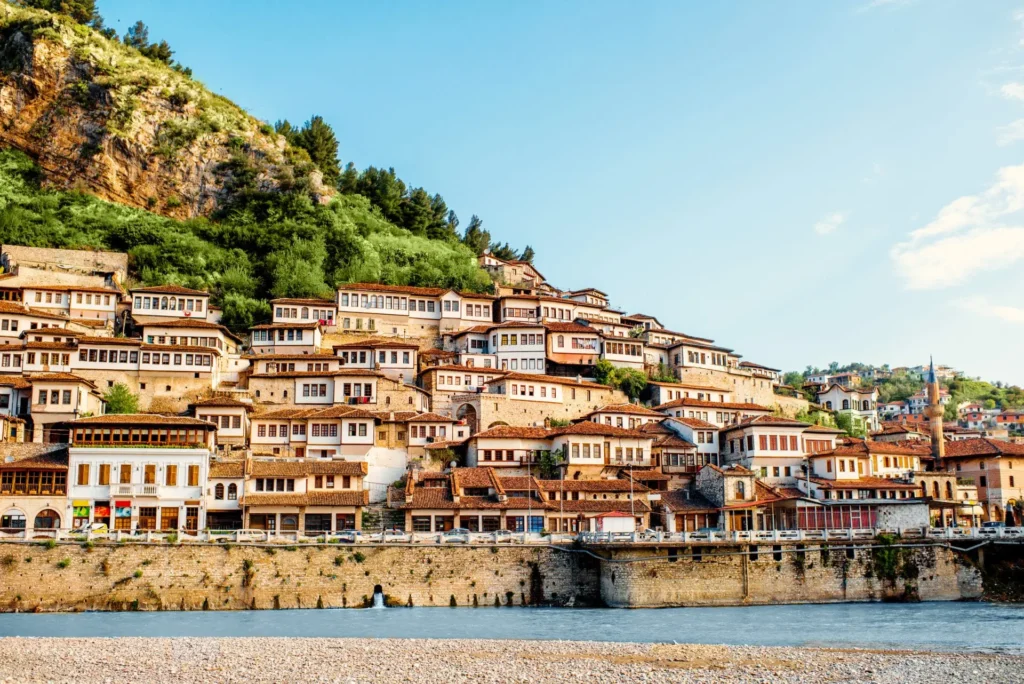
Albania is the anchor destination of any Western Balkans circuit. It has the most breadth of product and the strongest air connectivity in the region. Tirana functions as the primary entry and exit point, with hotel stock to absorb groups comfortably. The UNESCO-listed cities of Berat and Gjirokastra form the cultural core of most southern routings. The Albanian Riviera extends programs for summer departures, while the Albanian Alps serve active segments in the north. Moreover, Shkodra is well positioned as a northern gateway for transitions into Kosovo or Montenegro.
For a full breakdown of the Albanian leg across group profiles, see our guide to planning Albania group tours.
Kosovo
Kosovo is the most underutilised destination in the Balkans travel trade. It is Europe’s youngest nation, declared independent in 2008. The capital Pristina holds Ottoman heritage and a young, outward-looking urban culture in a single day’s itinerary.
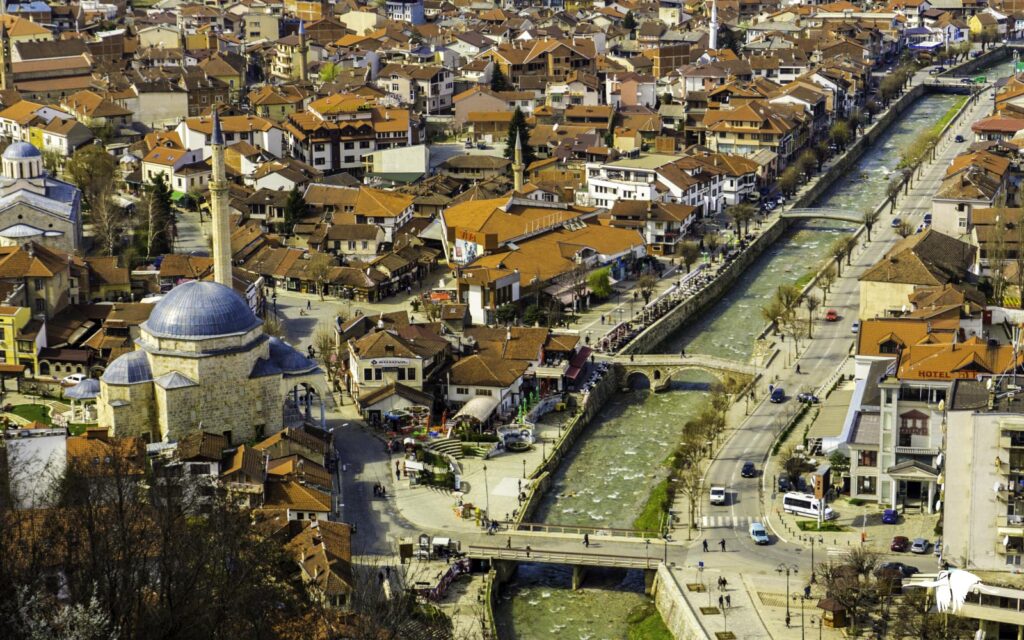
Prizren, however, is the stronger cultural asset. It has one of the most intact Ottoman urban fabrics in the region and performs consistently well with groups. Kosovo also integrates naturally into an Albania-anchored program. It operates on the Euro, which simplifies logistics for groups arriving from Albania.
Montenegro
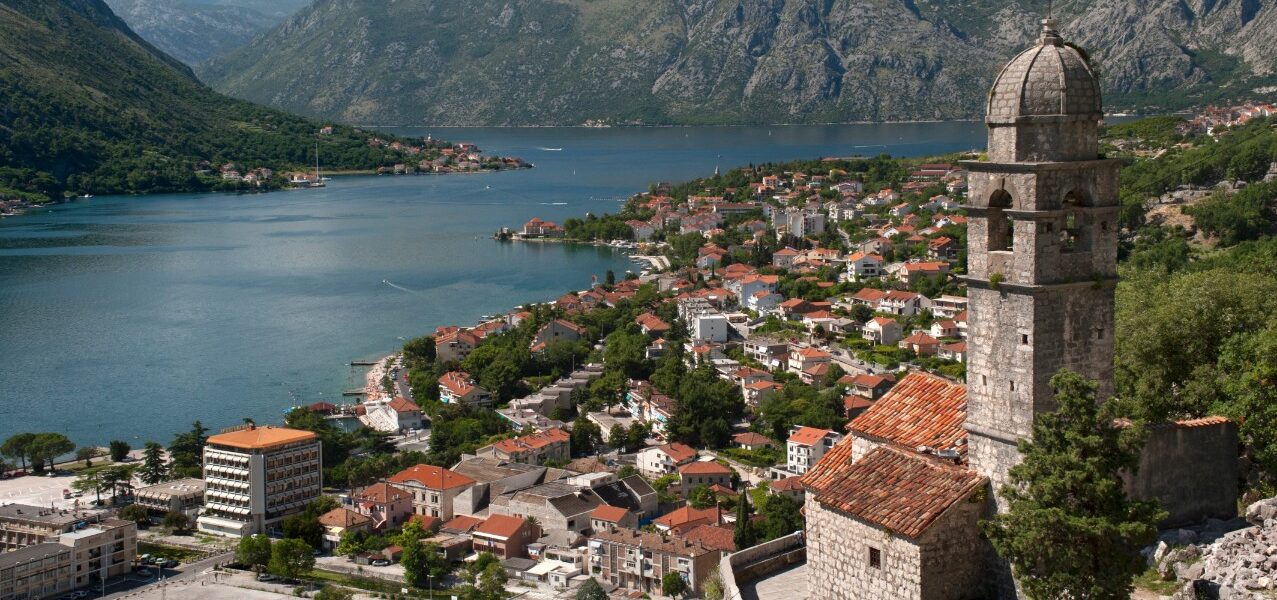
Montenegro brings the Adriatic dimension to the circuit. The Bay of Kotor is a UNESCO World Heritage Site and one of the most in-demand coastal experiences in Southern Europe for group travel. In addition, Durmitor National Park serves the active segment with credibility.
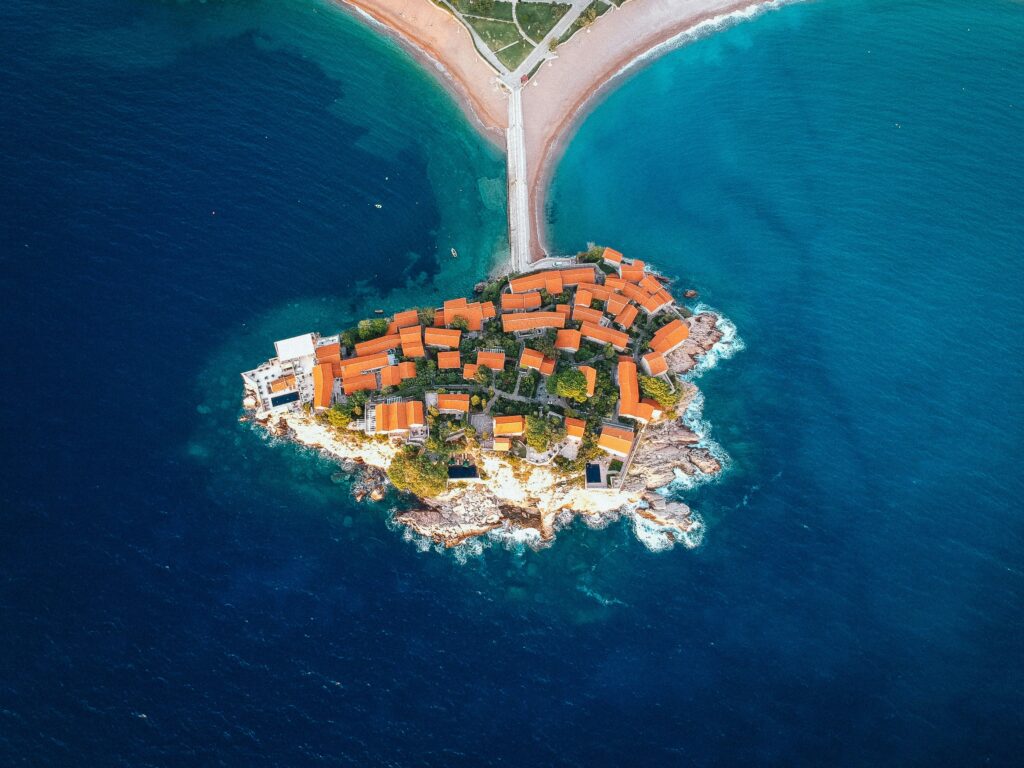
Montenegro works most effectively on coastal routings that flow naturally from the Albanian Riviera northward. It also pairs well with Albania as a standalone two-country program for shorter departures.
North Macedonia
North Macedonia anchors the historical depth of a longer program. Lake Ohrid is jointly listed as a UNESCO Natural and Cultural World Heritage Site. The density of Byzantine churches and monasteries around the lake, combined with a well-preserved old town, makes Ohrid one of the stronger-performing stops on any Balkans circuit.

Skopje, meanwhile, functions as a practical transit and overnight hub. Overall, North Macedonia adds significant product value to programs of ten days or more.
Operational Considerations for Multi-Country Programs
Multi-country group programs carry a different operational profile from single-destination tours. The following variables directly determine whether a program runs to standard:
- Ground coordination across borders: Cross-border movement requires vehicles licensed for international transit and guides with cross-border operating permissions. It also requires routing decisions that account for crossing wait times by season and border point. These variables cannot be managed effectively from a distance.
- Accommodation block management: Group hotel inventory outside the capitals is finite. Peak season availability across all four countries compresses significantly from May onwards. For this reason, programs need to be confirmed well in advance across the full routing.
- Licensed guide continuity: Guide licensing requirements differ by country. Without a single ground operator, managing this across a multi-country program means coordinating handoffs, which introduces risk to both program quality and client experience.
- Single-operator accountability: Working with one DMC consolidates responsibility into a single contract and point of contact. As a result, the tour operator eliminates coordination overhead and the liability ambiguity that comes with managing multiple local suppliers across different markets.
How RakiYa Travel Structures Multi-Country Programs
RakiYa Travel operates ground services across Albania, Kosovo, Montenegro, and North Macedonia from a single base. For trade partners, this means the full program, including transfers, accommodation, licensed multilingual guides, border logistics, and on-trip support, is managed under one operational framework. There are no handoffs between separate local operators as the group moves across borders.
Rather than building itineraries from scratch, our ready-made multi-country programs give agencies a proven structure to present to clients immediately. They can, however, be fully adapted by group profile, departure date, and budget. Custom programs are equally available for agencies with specific requirements.
Registered trade partners receive exclusive net rates and a dedicated account contact from first enquiry through to post-tour debrief. To access the full partner offer, register as a partner or submit your group requirements for a tailored proposal.
For a broader view of what a RakiYa Travel B2B partnership delivers, read our guide on working with a local Albania DMC.
Corporate and Incentive Multi-Country Programs
The Western Balkans circuit is gaining traction in the corporate incentive market. Agencies are increasingly looking to move clients beyond the established Mediterranean circuit, and the region offers genuine novelty, competitive pricing, and strong experiential content. RakiYa Travel designs and operates incentive programs, conference logistics, and team-building itineraries across all four countries. To learn more, see our MICE services or read our guide to team building experiences in Albania.
Frequently Asked Questions
Which countries does a Western Balkans group tour typically cover?
The standard Western Balkans group tour circuit covers Albania, Kosovo, Montenegro, and North Macedonia. Albania functions as the anchor destination given its product breadth and air connectivity. The combination of countries depends on program duration, group profile, and client interests. RakiYa Travel operates ground services across all four countries under a single structure.
Are border crossings manageable for international group travel in the Balkans?
Yes, for the majority of international source markets. Citizens of EU member states, the United States, the United Kingdom, Canada, and Australia enter all four countries visa-free. Crossing times vary by border point and season. Experienced local ground coordination is the most effective way to manage this variable across a multi-country program.
What is the advantage of using a single DMC across all four Balkans countries?
A single DMC consolidates supplier management, guide coordination, border logistics, and accountability into one contract and one point of contact. It eliminates service inconsistency at country transitions and gives the tour operator one relationship to manage rather than four. RakiYa Travel operates this model across Albania, Kosovo, Montenegro, and North Macedonia.
Do you offer ready-made multi-country Balkans programs for trade partners?
Yes. RakiYa Travel’s ready-made multi-country programs are available to registered trade partners at exclusive net rates. Custom programs are also available for agencies with specific requirements. Submit your requirements for a tailored proposal.
What is the best season for multi-country Balkans group programs?
April through June and September through October are the strongest months for cultural and mixed programs. July and August work well for coastal programs along the Albanian Riviera and Montenegro. However, accommodation inventory across all four countries requires earlier confirmation during peak season.