
Why should travel agencies include Montenegro in their 2027 travel portfolio? Montenegro combines UNESCO-listed coastal heritage, dramatic mountain landscapes, established Adriatic hospitality, outdoor adventures and opportunities for premium travel, cultural groups and corporate incentives.
Its relatively compact geography allows tour operators to combine historic towns, seaside experiences, mountain scenery, national parks and traditional gastronomy within one itinerary.
For 2027, Montenegro is worth considering not only as a summer coastal holiday destination but also for escorted cultural tours, FIT and tailor-made programmes, active travel, religious heritage, MICE and multi-country Balkan itineraries.
Continua sul nostro sito di viaggi, an Albania-based B2B Destination Management Company working with international tour operators and travel agencies, explores Montenegro’s tourism outlook, destination strengths, transport connections and practical considerations for developing new travel products.
1. Montenegro Tourism in 2027: What the Latest Figures Tell Us
Montenegro remains an established international tourism destination, particularly along the Adriatic coast.
According to Montenegro’s Ministry of Tourism, the country recorded 1,617,563 tourist arrivals during January–July 2026, representing growth of 7.78% compared with the corresponding period in 2025.
Overnight stays reached approximately 8.86 million during the same period, an increase of 7.98%.
July 2026 was particularly strong, with 623,104 tourist arrivals and approximately 3.72 million overnight stays.
These figures indicate continued tourism activity but should not be interpreted as a forecast of guaranteed growth in 2027.
Read the Montenegro Ministry of Tourism’s August 2026 statistical announcement.
Why These Figures Matter for Tour Operators
Montenegro already has established tourism demand, especially for its coastline. The opportunity for international agencies is to develop products that extend beyond conventional summer resort stays.
Cultural circuits, off-season travel, mountain programmes, gastronomy, multi-country touring and corporate events can help diversify the products offered to different source markets.
Montenegro’s Latest Government Tourism Priorities
In June 2026, the Government of Montenegro adopted a draft Law on Tourism and Hospitality for further legislative consideration.
The proposed framework emphasises regional tourism development, local community interests, preservation of cultural heritage, destination resilience and the use of digital technologies.
Separately, the OECD Tourism Trends and Policies 2026 report identifies diversification beyond the coastline and the development of northern tourism infrastructure as important policy priorities.
For agencies building their 2027 portfolios, this strengthens the case for programmes incorporating northern Montenegro, rural experiences, national parks and year-round travel.
See the Government of Montenegro’s June 2026 announcement for additional context.
2. What Makes Montenegro Different from Other Adriatic Destinations?
Montenegro’s main differentiation is the close relationship between its coastline and mountainous interior.
Travellers can explore historic maritime towns around the Bay of Kotor, discover national parks and traditional mountain villages, and experience different landscapes within the same trip.
Unlike destinations primarily associated with beach holidays, Montenegro supports several distinctive travel themes.
- UNESCO cultural heritage: Historic Kotor, fortified towns and architectural traditions.
- Adriatic scenery: The Bay of Kotor, coastal settlements and seaside experiences.
- Mountain adventure: Durmitor, Žabljak, Tara Canyon and northern hiking routes.
- Traditional gastronomy: Regional seafood, mountain cuisine, local wines and rural food experiences.
- Premium hospitality: Coastal resorts, boutique properties and private experiences.
- Regional connectivity: Opportunities to combine Montenegro with Albania, Croatia, Kosovo and Bosnia and Herzegovina.
Explore RakiYa Travel’s Montenegro destination guide for more information about the country’s travel offering.
3. The Bay of Kotor: Montenegro’s International Heritage Landmark
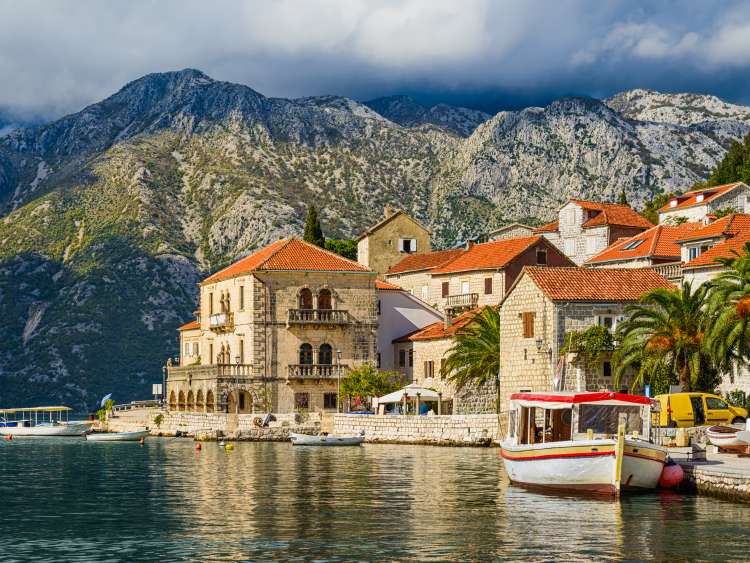
The Bay of Kotor is one of Montenegro’s most recognisable landscapes.
Surrounded by steep mountains and historic settlements, the bay combines natural scenery with centuries of maritime and architectural heritage.
The Natural and Culturo-Historical Region of Kotor has been recognised by UNESCO since 1979.
Kotor: A Cultural Destination for Escorted Groups
Kotor’s historic centre offers narrow medieval streets, churches, squares, palaces and defensive fortifications.
The town’s architecture reflects its maritime history and connections with Venetian and Adriatic cultural traditions.
For organised groups, guided walking tours provide an effective way to understand the city’s historical development.
Explore RakiYa Travel’s Kotor destination page.
Perast and the Bay’s Maritime Heritage
Perast is known for its traditional stone architecture, waterfront setting and maritime heritage.
A visit can include a boat excursion towards Our Lady of the Rocks, subject to weather, vessel arrangements and access conditions.
For cultural groups, Perast complements Kotor with a quieter small-town atmosphere.
Why Kotor Requires Careful Group Planning
Kotor is a busy cruise destination, particularly during the summer.
Large cruise-ship arrivals can affect pedestrian congestion, sightseeing conditions and the overall visitor experience.
Travel agencies should coordinate coach access, group entry arrangements, guided-tour starting times and alternative sightseeing options.
Early-morning visits or suitable shoulder-season programmes may provide a more comfortable experience.
4. Beyond Kotor: Montenegro’s Coastal Destinations
Budva: Beaches, Old Town and Coastal Hospitality
Budva combines a historic old town with beaches, restaurants, nightlife and extensive accommodation options.
It is suitable for cultural and coastal combinations, short breaks and programmes that include leisure time.
For international agencies, Budva can serve as a base for selected excursions to other parts of Montenegro’s coast.
See RakiYa Travel’s Budva destination guide.
Herceg Novi: Heritage and the Entrance to the Bay
Herceg Novi provides opportunities for historic sightseeing, coastal experiences and visits associated with the entrance to the Bay of Kotor.
Its location also makes it relevant for programmes arriving through Dubrovnik Airport in Croatia.
Ulcinj: Southern Montenegro and Cultural Diversity
Ulcinj offers a different coastal experience, combining beaches, historic architecture and a strong Albanian cultural influence.
Its location near the Albanian border makes it especially relevant to multi-country programmes connecting Montenegro with Shkodër and Tirana.
For travel agencies, Ulcinj can provide a useful transition between the Montenegrin coastline and northern Albania.
5. Montenegro’s Mountains: Durmitor, Tara Canyon and Northern Tourism
Montenegro’s mountains offer a substantial opportunity to diversify the country’s tourism portfolio.
Durmitor National Park, Žabljak, Tara Canyon, Biogradska Gora and the Prokletije mountain region support hiking, nature-based travel and selected adventure experiences.
Durmitor National Park
Durmitor National Park is a UNESCO World Heritage property, recognised for its mountain landscapes, glacial lakes, forests and geological features.
Its highest peak, Bobotov Kuk, reaches 2,523 metres.
The park is suitable for a variety of active travel concepts, including hiking, guided nature excursions and multi-day mountain stays.
Further information is available from the National Tourism Organisation’s Durmitor guide.
Tara Canyon and Adventure Travel
The Tara River Canyon is one of Montenegro’s most dramatic natural attractions.
Rafting, scenic viewpoints and outdoor excursions can form part of an active travel programme, subject to seasonal conditions and suitable local operators.
Tour agencies should verify activity difficulty, minimum ages, river conditions, insurance arrangements and guide qualifications.
Biogradska Gora and Prokletije
Biogradska Gora is known for its forest landscapes and mountain environment, while the Prokletije region connects Montenegro with the wider Accursed Mountains.
For specialist hiking agencies, Montenegro can be combined with northern Albania and Kosovo through carefully coordinated trekking programmes.
These products require route-specific guiding, accommodation planning and cross-border procedures where applicable.
6. How to Reach Montenegro in 2027: Airports and International Connections
Montenegro’s main international aviation gateways are Podgorica Airport and Tivat Airport.
Dubrovnik Airport in neighbouring Croatia is also a useful alternative for selected coastal programmes.
Podgorica Airport: The Capital and Inland Gateway
Podgorica Airport serves the capital and offers practical access to Lake Skadar, Cetinje, central Montenegro and northern routes.
It can also be used for coastal touring, although travel agencies should account for road transfers and seasonal congestion.
In March 2026, Wizz Air established a new base at Podgorica Airport, expanding its international connectivity.
According to the official Airports of Montenegro announcements, the development included additional international routes.
Best suited for: Podgorica, Lake Skadar, central Montenegro, northern travel programmes and selected nationwide circuits.
Tivat Airport: The Adriatic Coastal Gateway
Tivat Airport is particularly convenient for Kotor, Tivat, Budva and the surrounding coastal region.
For itineraries concentrated around the Bay of Kotor, it can reduce the amount of ground transportation required compared with arrival through Podgorica.
International services are more seasonal, however, and the exact route network varies throughout the year.
For example, a seasonal Amsterdam–Tivat service was announced for summer 2026.
Best suited for: Kotor, Budva, premium coastal stays, Adriatic short breaks and selected incentive programmes.
Dubrovnik Airport: An Alternative for Kotor and Coastal Montenegro
Dubrovnik Airport in Croatia is another practical gateway for the northern Montenegrin coast.
It is especially relevant for agencies combining Dubrovnik, Herceg Novi, Perast and Kotor.
However, travellers must cross the Croatia–Montenegro international border, which can experience substantial queues during busy summer periods.
Travel agencies should therefore allow realistic transfer buffers rather than relying exclusively on mapping-service driving estimates.
Could Tirana Airport Be Used for Montenegro Tours?
Yes. Tirana International Airport can be considered for programmes connecting Albania and southern Montenegro.
Possible routes include Tirana, Shkodër, Ulcinj, Bar and Budva.
This gateway may be particularly useful for travel agencies developing multi-country itineraries or open-jaw flight arrangements.
Transport times depend on the border crossing, traffic and route selected.
7. Can Italian Tour Operators Reach Montenegro by Ferry?
Sea connections are an important consideration for Italian travel agencies, especially those developing coach tours, motorcycle programmes and self-drive holidays.
Historically, passenger-ferry services connected the Montenegrin port of Bar with Bari and Ancona in Italy.
However, the Bar–Bari and Bar–Ancona passenger services were not operating as confirmed regular routes during 2026.
Published reports identified vessel availability and port infrastructure issues among the reasons for the interruption.
For 2027, agencies should not treat direct Italy–Montenegro ferry services as confirmed until operators publish bookable schedules.
Alternative: Bari to Durrës, Then Montenegro by Road
Italian travel agencies can consider the established Bari–Durrës passenger and vehicle ferry route to Albania.
From Durrës, an itinerary can continue by road through northern Albania towards Montenegro.
This option is particularly relevant for:
- Escorted coach tours from Italy.
- Motorcycle and self-drive holidays.
- Combined Albania–Montenegro cultural circuits.
- Adriatic multi-country itineraries.
Ferry operators such as Adria Ferries provide information about Albania–Italy sailings.
Alternative: Italy to Dubrovnik, Then Montenegro
Where operating, ferry services between Italy and Dubrovnik can also support onward travel towards Montenegro.
However, availability is seasonal, schedules can change and the Croatia–Montenegro border must be included in the itinerary.
Travel agencies should verify current services through Jadrolinija before confirming arrangements.
Local Ferry Services in the Bay of Kotor
Montenegro also has local vehicle-ferry services across the Bay of Kotor.
These can reduce driving distances for particular routes, but queues during the summer season may affect transfer times.
Coach suitability, vehicle charges and sailing arrangements should be confirmed in advance.
8. Montenegro for Escorted Cultural and Group Tours
Montenegro works well for escorted cultural itineraries combining historic coastal towns, scenic drives and traditional experiences.
A typical four- or five-day cultural programme can include Kotor, Perast, Budva, Cetinje and selected inland destinations.
Longer tours can incorporate Durmitor, Lake Skadar, Ulcinj or neighbouring Balkan countries.
For travel agencies, the main benefit is the ability to combine several different landscapes and experiences within a relatively compact touring programme.
Suggested 5-Day Montenegro Cultural Itinerary
- Day 1: Arrival at Tivat or Podgorica Airport and transfer to the selected coastal hotel.
- Day 2: Guided Kotor Old Town visit and an excursion to Perast.
- Day 3: Budva, Cetinje and selected coastal or cultural experiences.
- Day 4: Lake Skadar or another suitable nature and gastronomy excursion.
- Day 5: Departure transfer according to flight arrangements.
This is an indicative planning framework rather than a confirmed tour schedule. Activities, routing and overnight locations should be adapted to the group and travel season.
9. Montenegro for FIT, Tailor-Made and Premium Travel
Montenegro offers opportunities for private journeys and tailor-made programmes.
Coastal boutique hotels, premium resorts, private boat experiences, wine tastings and flexible touring can appeal to travellers seeking a more personalised itinerary.
The country can also support fly-and-drive holidays, although mountain roads, summer congestion and parking restrictions in historic centres require careful planning.
For agencies, private transport and carefully selected accommodation can improve the overall experience, especially where travel involves different regions.
Montenegro should not automatically be positioned as a low-cost destination. Popular coastal accommodation can command premium rates during the peak season.
Value should instead be assessed through destination appeal, product quality, itinerary design and the services included.
10. Montenegro for MICE and Corporate Incentive Travel
Montenegro offers opportunities for meetings, incentives, corporate retreats and special-interest business travel.
Coastal hotels around Tivat, Budva and the Bay of Kotor can support programmes combining meeting facilities with cultural sightseeing, boat excursions, gastronomy and team-building activities.
Podgorica also offers potential for city-based corporate events and business meetings.
Why Montenegro Can Work for Incentive Travel
Its compact geography allows event planners to combine business activities with varied leisure experiences.
A corporate programme might include:
- Meetings or workshops at a suitable hotel.
- Private cultural visits in Kotor.
- Boat experiences around the bay.
- Regional food and wine activities.
- Outdoor team-building or nature excursions.
- Gala dining or selected evening events.
For international event organisers, venue selection should be based on verified delegate capacity, meeting equipment, accommodation inventory, transport access and supplier availability.
The National Tourism Organisation of Montenegro provides information about the country’s tourism positioning and business-travel resources.
RakiYa Travel develops B2B travel and destination management programmes, including corporate and incentive concepts across selected Balkan destinations.
11. Montenegro as Part of a Multi-Country Balkan Tour
One of Montenegro’s important advantages for international tour operators is its position between Croatia, Bosnia and Herzegovina, Serbia, Kosovo and Albania.
Its cultural and geographical diversity makes it suitable for regional touring programmes.
Montenegro and Albania
A route connecting Kotor, Budva, Ulcinj, Shkodër, Krujë and Tirana can combine Adriatic heritage with Albania’s cultural attractions.
This combination is especially relevant for agencies developing seven- to ten-day regional programmes.
Montenegro and Croatia
Dubrovnik and the Bay of Kotor create a strong Adriatic cultural pairing.
However, the international border and seasonal traffic should influence the sequence and pacing of the itinerary.
Montenegro and Bosnia and Herzegovina
Kotor, Trebinje, Mostar and Sarajevo offer opportunities for a cultural route exploring historic towns, architecture, gastronomy and regional history.
Driving distances and mountainous routes should be assessed carefully.
Montenegro, Albania, Kosovo and North Macedonia
For a broader Western Balkan product, Montenegro can be combined with Albania, Kosovo and North Macedonia.
RakiYa Travel’s Discover the Balkans in 7 Days itinerary provides an example of a multi-country cultural programme covering these four destinations.
Travel agencies should check border-entry requirements, vehicle permissions, guiding arrangements and the feasibility of each transfer before finalising the programme.
12. Best Time to Visit Montenegro in 2027
Montenegro supports different travel products throughout the year, but the most suitable season depends on the itinerary.
| Season | Recommended Products | Planning Considerations |
|---|---|---|
| March–May | Cultural touring, Kotor, gastronomy, city breaks and selected MICE | Variable weather and limited access to higher mountain routes |
| June | Coastal touring, cultural groups, nature and selected hiking | Growing coastal demand; check mountain trail conditions |
| July–August | Beach holidays, boating, mountain hiking and summer travel | Peak hotel demand, coastal traffic and cruise congestion |
| September–October | Cultural circuits, gastronomy, coastal touring and selected outdoor experiences | Changing mountain weather and seasonal supplier availability |
| November–February | City breaks, selected meetings, cultural programmes and winter activities | Weather, limited seasonal flights and mountain access restrictions |
For escorted cultural groups, spring and early autumn often provide a better balance between sightseeing conditions and coastal congestion.
For mountain hiking, the appropriate season depends on elevation, trail conditions and the group’s level of experience.
13. Is Montenegro Good Value for Travel Agencies?
Montenegro offers opportunities across different accommodation and travel segments, but it should not be marketed simply as a universally inexpensive alternative to other Mediterranean countries.
Popular coastal resorts and premium properties may be relatively expensive during the peak summer season.
For tour operators, the most important commercial factors include:
- Accommodation availability and room allocation.
- Seasonal differences in supplier pricing.
- Realistic transport and guiding costs.
- Appropriate group size and vehicle selection.
- Destination experiences supporting the selling price.
- Reliable suppliers and operational flexibility.
- Clear contractual and cancellation conditions.
Shoulder-season cultural programmes, regional circuits and selected inland experiences may offer opportunities to differentiate the product from peak-season resort holidays.
14. Operational Challenges for Montenegro Tours
Coastal Traffic and Cruise Arrivals
The Bay of Kotor and popular coastal roads can experience significant congestion during the summer.
Tour operators should monitor cruise activity, allow realistic coach transfer times and avoid excessively tight sightseeing schedules.
Historic Centre Access
Kotor and other historic towns contain narrow pedestrian streets and restricted vehicle access.
Appropriate coach drop-off points and walking distances should be checked before confirming visits.
Mountain Driving Conditions
Routes towards Durmitor, northern Montenegro and remote valleys may involve winding mountain roads.
Weather, roadworks, vehicle suitability and driver-hour requirements should influence itinerary planning.
Seasonal Flight Availability
Tivat’s international route network changes significantly between summer and winter.
Travel agencies should confirm flight schedules before finalising departure dates.
Environmental Responsibility
Montenegro’s UNESCO heritage areas and protected landscapes require responsible visitor management.
The Government of Montenegro reaffirmed its commitment to protecting the Natural and Culturo-Historical Region of Kotor during discussions with UNESCO in May 2026.
See the official government announcement on Kotor heritage protection.
Tour operators should support suitable visitor numbers, responsible outdoor experiences and respect for historic communities.
15. How RakiYa Travel Supports Montenegro and Balkan Tour Programmes
For international travel agencies, successful Montenegro programmes depend on suitable suppliers, realistic route planning and effective coordination between different destinations.
RakiYa Travel works exclusively with international tour operators and travel agencies, developing private, escorted and multi-country programmes across Albania and selected Balkan destinations, including Montenegro.
Services can include:
- Cultural and escorted group itinerary development.
- FIT and tailor-made programmes.
- Accommodation and supplier coordination.
- Ground transport and transfer arrangements.
- Local guiding and cultural experiences.
- Nature and active travel arrangements.
- Corporate incentive and MICE programme coordination.
- Multi-country Balkan itinerary development.
- On-the-ground operational assistance.
Explore Montenegro as a destination and the RakiYa Travel tour portfolio for programme inspiration.
Frequently Asked Questions About Montenegro Travel in 2027
Why Should Tour Operators Include Montenegro in Their 2027 Portfolio?
Montenegro combines Adriatic coastal heritage, UNESCO sites, national parks, mountain landscapes, premium hospitality and opportunities for regional cultural touring. It supports different travel products including escorted groups, FIT, active travel and corporate incentives.
Which Airport Is Best for Kotor and Budva?
Tivat Airport is often the most convenient option for the Bay of Kotor and nearby coastal destinations. Podgorica Airport is another option, while Dubrovnik Airport in Croatia can be useful for itineraries that allow time for international border crossings.
Can Italian Tour Operators Reach Montenegro by Ferry in 2027?
Direct Italy–Montenegro passenger ferry services were not confirmed as operating in 2026, and 2027 availability must be checked. Alternative arrangements may involve ferries from Italy to Durrës in Albania or, where operating, Dubrovnik in Croatia, followed by road travel.
What Is the Best Time to Visit Montenegro?
Spring and early autumn are attractive periods for cultural touring. Summer is the principal season for beach holidays, while mountain activities depend on local conditions and elevation.
How Many Days Are Needed for a Montenegro Group Tour?
Four to five days can provide a useful introduction to Kotor, Budva and selected cultural attractions. Seven to ten days or more allow wider coverage of national parks, northern Montenegro or neighbouring Balkan destinations.
Is Montenegro Suitable for Hiking and Adventure Groups?
Yes. Durmitor, Tara Canyon, Biogradska Gora and the Prokletije region provide opportunities for guided hiking, nature travel and selected adventure activities. Fitness requirements, seasonality and supplier qualifications should be assessed carefully.
Can Montenegro Be Combined with Albania and Croatia?
Yes. Montenegro can form part of regional cultural circuits connecting Albania, Croatia, Kosovo, North Macedonia and Bosnia and Herzegovina. These itineraries require appropriate border planning and realistic travel times.
Is Montenegro Suitable for MICE and Corporate Events?
Yes. Coastal hotels, cultural attractions and nature experiences can support incentive travel, meetings and corporate retreats. Venue capacity, technical facilities and accommodation should be confirmed according to each event’s requirements.
What Are Montenegro’s Main UNESCO Destinations?
Montenegro’s UNESCO World Heritage properties include the Natural and Culturo-Historical Region of Kotor and Durmitor National Park, alongside components of transnational listings for medieval Stećci tombstones and Venetian defensive works.
Does RakiYa Travel Organise Montenegro Tours for International Agencies?
RakiYa Travel develops Montenegro and multi-country Balkan programmes for international travel agencies and tour operators, including cultural itineraries, private travel and selected specialist arrangements.
Final Thoughts: Montenegro’s Opportunity for 2027
Montenegro’s commercial appeal lies in its ability to combine established Adriatic tourism with historic towns, mountain landscapes, cultural experiences and premium hospitality.
For international travel agencies, the opportunity in 2027 is to develop programmes that move beyond conventional summer coastal holidays.
Kotor and Perast provide strong cultural attractions, while Durmitor, Tara Canyon and northern Montenegro create opportunities for active and nature-based travel.
Montenegro also offers valuable possibilities for corporate incentives and multi-country Western Balkan circuits.
The strongest products will combine distinctive destinations with dependable local logistics, appropriate pacing and realistic commercial planning.
Develop Your Montenegro 2027 Portfolio with RakiYa Travel
RakiYa Travel supports international tour operators and travel agencies developing Montenegro and wider Western Balkan itineraries.
Whether your agency is planning escorted cultural groups, private FIT journeys, active travel, coastal programmes or corporate incentives, our team can coordinate suitable regional services.
Explore the Montenegro destination guide, discover the Discover the Balkans in 7 Days programme, or visit Continua sul nostro sito di viaggi to discuss a 2027 partnership.
RakiYa Travel — Where Business Meets the Balkans.
Editorial note: Tourism statistics, transport information and policy developments reflect information available as of 1 November 2026. Tourism figures represent reported arrivals and overnight stays, not guaranteed demand for 2027. Airlines, ferry schedules, border procedures, attraction access and supplier conditions should be verified before confirming travel arrangements.