
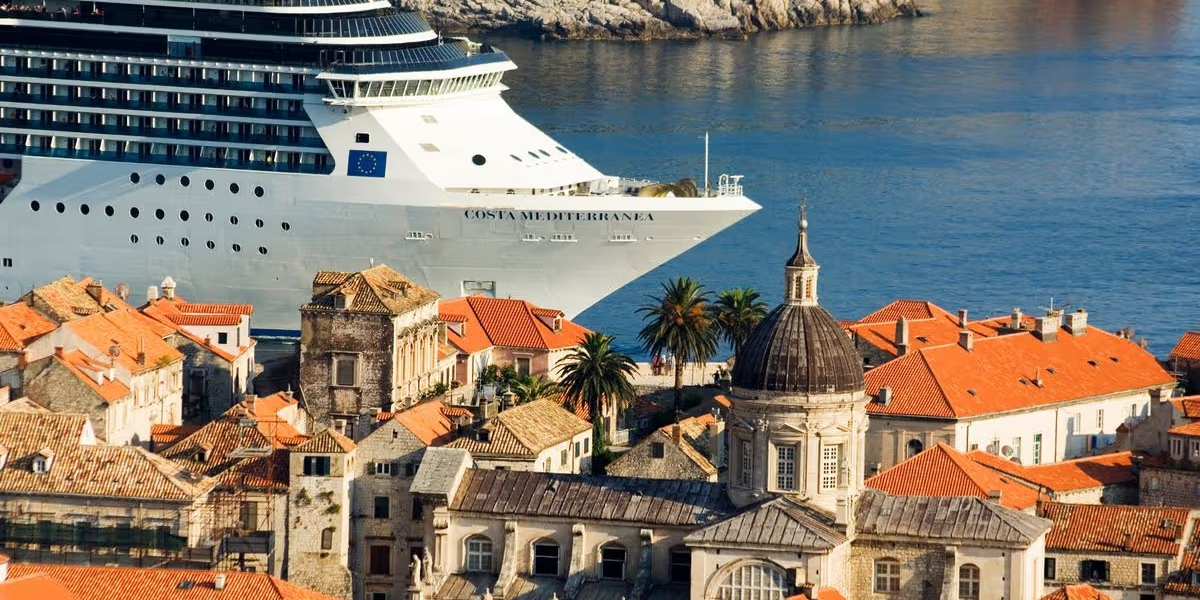
Adriatic and Balkan shore excursions require more than a guide and a vehicle waiting at the port. Cruise calls involve fixed disembarkation windows, changing berth arrangements, traffic variables, tendering or shuttle procedures and a return deadline that cannot be treated casually. For international cruise operators and travel agencies, one regional ground-handling partner can simplify the coordination of excursions across several countries.
RakiYa Travel provides locally coordinated shore-excursion support from Koper and Croatian ports to Kotor, Bar, Albania and Corfu. Programmes can be shaped around a 4–8-hour call, with private guides, port pickups, appropriate vehicle categories, multilingual delivery and realistic time buffers. The service is designed for cruise agencies, shore-excursion operators and travel planners seeking a dependable local contact across the Adriatic and wider Balkans.
As a licensed DMC with tour operator and travel agency licences and public liability insurance, RakiYa can coordinate the destination services behind a private, small-group or larger organised excursion. Each programme remains subject to the confirmed ship schedule, port instructions, road conditions, site availability and the agreed operating plan.
One shore-excursion partner from Slovenia to Greece
The Adriatic coastline crosses several national borders within a relatively compact touring region. A cruise programme may include Koper, Dubrovnik, Split, Kotor, Sarandë and Corfu, yet each port has different access arrangements, road networks, local regulations and sightseeing patterns. Working with separate suppliers at every stop can create additional contracting and communication tasks for the cruise operator.
RakiYa’s multi-country Balkan coverage allows partners to request coordinated services through one DMC contact while retaining local destination knowledge at each port. The operating team can develop individual excursions or a broader programme covering:
- Slovenia: Koper and combinations with the Slovenian coast or nearby cultural sites.
- Croatia: Dubrovnik, Split, Šibenik, Zadar and Rijeka.
- Montenegro: Kotor and Bar.
- Albania: Sarandë, Vlorë and Durrës.
- Greece: Corfu and its historic, coastal and cultural surroundings.
Port calls are not interchangeable. The right programme depends on the ship’s arrival and departure times, whether passengers disembark directly or use a tender, the distance between the port and the main attraction, and the amount of time required for boarding procedures. RakiYa builds the excursion around those practical conditions rather than treating a standard sightseeing itinerary as automatically suitable for a cruise call.
Four- to eight-hour excursions planned around the port call
A shorter excursion may focus on one historic centre, a nearby cultural site or a carefully selected local experience. A longer call can support a two-part programme, such as a guided city visit followed by a regional excursion or meal. However, extending the itinerary is only useful when the additional travel remains compatible with the ship’s return time.
Every proposed programme should clarify the following before confirmation:
- Ship arrival and departure times, including the required all-aboard deadline.
- Berth, anchorage or tender arrangements and any port shuttle requirements.
- Passenger numbers, mobility considerations and preferred excursion pace.
- Language requirements for guides and tour materials.
- Vehicle type, luggage requirements and any restrictions on coach access.
- Attraction opening times, timed entry requirements and seasonal operating periods.
- Border formalities where a route crosses between countries.
- A planned return buffer that allows for traffic, queues, tendering and port procedures.
Travellers frequently value private or small-group excursions because they allow more flexible pacing and more local interpretation. At the same time, cruise passengers and operators commonly stress the importance of a substantial return buffer. RakiYa therefore treats the return journey as part of the excursion design, not as an afterthought. A proposed route may be shortened, repositioned or given a different departure time when the port call or local conditions require it.
Practical shore-excursion ideas by port
Koper: coastal Slovenia and accessible cultural visits
Koper works well for a concise guided visit through the old town, combined with another nearby Slovenian coastal or cultural stop where the call duration permits. The official Koper cruise-terminal information covers operational matters such as bus parking, security, working hours and transport connections that should be checked when designing a group movement plan.
For a 4-hour call, a focused walking tour and local tasting may be more appropriate than a distant inland excursion. With 6–8 hours, the programme can be expanded after checking traffic, attraction hours and the vessel’s confirmed schedule.
Dubrovnik: historic-city access and scheduled passenger flow
Dubrovnik shore excursions often centre on the UNESCO-listed Old Town, but the port-to-city transfer must be built into the timing. Travellers regularly report that organised transfers, shuttles or taxis are needed from the cruise port, and many recommend an early visit because heat and crowds can become more difficult later in the day.
RakiYa can combine a guided Dubrovnik Old Town visit with a viewpoint, local meal or carefully selected nearby experience when time allows. Port procedures and passenger-flow measures can change, so the Port of Dubrovnik Authority’s information on Dubrovnik cruise-destination management should be considered alongside the final ship schedule.
Split: Diocletian’s Palace or a wider regional visit
Split’s port and historic centre are close enough for many visitors to explore on foot, making a guided walking excursion a practical choice for shorter calls. The core programme can cover Diocletian’s Palace, the waterfront and selected local heritage points without adding a long road transfer.
For a longer call, operators may consider Trogir, Krka or another regional combination, subject to traffic and attraction opening periods. A local guide helps the group decide how much time to devote to the city before travelling further, rather than risking an overextended route.
Šibenik, Zadar and Rijeka: flexible Croatian port programmes
Šibenik can support a focused historic-centre visit or a wider cultural and natural programme when the call permits. Zadar is often considered easy to explore independently, with the old town, waterfront and Sea Organ among the highlights travellers commonly mention for a short visit. A guided walk adds context while preserving time for independent exploration.
Rijeka can be designed around the city’s maritime and cultural identity, with optional extensions depending on the port schedule. For all three ports, the final route should account for coach access, group meeting points, local traffic and the time needed to bring passengers back through port security procedures.
Kotor and Bar: Montenegro’s bay, old towns and inland options
Kotor is well suited to a guided old-town walk, a viewpoint or a carefully timed Bay of Kotor combination. Visitors often praise the bay setting, medieval streets and walkability, but many also note that the old town becomes crowded when several ships arrive. Early or later touring can improve the experience, while transfers to Perast and other bay locations require extra planning for road traffic and tendering.
The official Port of Kotor technical information should be reviewed when confirming berth, anchorage and passenger-transfer arrangements. Bar offers a different starting point, with options such as an old-town and coastal heritage programme or a longer excursion towards Montenegro’s inland landscapes. The route must be matched closely to the vessel’s time alongside.
Sarandë, Vlorë and Durrës: Albanian heritage, coast and local life
From Sarandë, a cruise excursion can connect the coast with Butrint, local gastronomy or a selected viewpoint. Travellers consistently value Butrint’s archaeological setting and the scenery around Sarandë, although transfers and port logistics can reduce time at the site. A timed programme should therefore confirm entry arrangements, transport duration and the planned return buffer before sales copy is finalised.
Vlorë can support coastal sightseeing, independence heritage and local food experiences, while Durrës offers a practical combination of Roman history, the waterfront and a nearby restaurant or cultural visit. These programmes can introduce clients to Albania beyond a simple beach stop, but attraction opening periods and road conditions should be checked for each sailing.
Corfu: old-town heritage and carefully selected island combinations
Corfu can be organised around the historic town, a coastal viewpoint, Paleokastritsa, Achilleion or a beach stop, depending on the length of the call and local traffic. Travellers often praise guides who manage limited port time efficiently and communicate clearly about meeting points and return arrangements.
A longer excursion may combine Corfu Town with one regional highlight, but attempting several distant stops can reduce the time available at each location. Where the programme includes a special event, attraction or religious celebration, entry conditions, crowd levels and operating dates should be confirmed before publication.
Excursion formats and vehicle planning
RakiYa can propose different operating formats according to passenger numbers and the desired level of flexibility. Vehicle allocation is confirmed against the final group size, luggage needs, road access and excursion route rather than selected solely by destination.
| Excursion format | Suitable use | Operational considerations |
|---|---|---|
| Private car or small vehicle | FIT passengers, couples, families and executive travellers | Flexible departure, direct guiding and access to locations unsuitable for larger vehicles. |
| Private minivan | Small private groups and family or incentive movements | Useful for a personalised route, with seating capacity confirmed according to the selected vehicle and passenger requirements. |
| Minibus | Small and medium organised groups | Balances group cohesion with access to regional sites; road restrictions and meeting points require advance checking. |
| Full-size coach | Larger cruise groups and scheduled shore-excursion departures | Requires suitable coach access, parking or loading arrangements and disciplined timing at every stop. |
Guides can be arranged in the language required by the market, subject to availability and confirmation. Depending on the programme, services may include a private guide, driver-guide, local specialist, restaurant coordination, attraction tickets and operational assistance at the port. The exact inclusions, language, vehicle and group capacity should be stated in the quotation so that the cruise operator can sell the excursion accurately.
Cross-border coordination and return planning
Some of the most attractive Adriatic combinations cross national borders, such as Corfu with Sarandë or Albania with Montenegro and Croatia. Cross-border excursions need more than a map-based calculation. Operators should consider passport requirements, border controls, ferry or tender arrangements, vehicle documentation, seasonal traffic and the possibility that a border crossing takes longer than expected.
RakiYa can coordinate the local elements of a multi-country programme through its regional network, including vehicles, guides, accommodation where required, attraction arrangements and destination-level communication. The route remains subject to the confirmed border, port and transport conditions, so quotations should allow time for final operational checks.
Return planning is based on the ship’s published schedule and the port’s operating arrangements, with a safety buffer for foreseeable disruption. The buffer should take account of traffic, queues, passenger regrouping, tender transfers, shuttle operations and port security. No local operator can eliminate every external delay; responsible planning instead reduces avoidable exposure and keeps the group informed if conditions change.
Why cruise operators use a local DMC
A regional DMC gives cruise partners one point of contact while preserving destination-specific knowledge. This is particularly useful when an operator is developing a portfolio of shore excursions rather than a single port product.
- Local interpretation: guides connect major sights with living culture, history, gastronomy and local context.
- Operational coordination: port pickups, meeting points, vehicles, guides, restaurants and tickets are aligned within one programme.
- Flexible product design: excursions can be adapted for FIT passengers, private groups, escorted groups, different budgets, languages and travel styles.
- Regional capability: one partner can support a multi-country Adriatic and Balkan programme rather than requiring separate communication for every destination.
- Commercial clarity: the quotation can specify the proposed route, duration, inclusions, vehicle category, guide language and conditions that remain subject to confirmation.
RakiYa’s approach combines authentic local expertise with practical B2B coordination. The aim is not to make every port call follow the same formula, but to create excursions that fit the destination, the passengers and the ship’s operating window.
Frequently asked questions
Can RakiYa organise shore excursions at several ports on one itinerary?
Yes. RakiYa can coordinate enquiries across Albania, Montenegro, Croatia, Slovenia and Corfu through one DMC contact. Each port programme is planned separately because access arrangements, guide availability, transport times and operating conditions differ.
How long can a private shore excursion last?
Programmes can be designed for approximately 4–8 hours, subject to the ship’s time in port and the confirmed return deadline. A shorter call usually suits one concentrated experience, while a longer call may allow a city visit combined with a nearby site or meal.
What vehicle capacities are available?
RakiYa can propose private cars, minivans, minibuses and full-size coaches according to the group size and route. Exact seating capacity and vehicle allocation are confirmed in the quotation because they depend on passenger numbers, luggage, road access and availability for the sailing date.
Can excursions be offered in different languages?
Multilingual guiding can be requested for the relevant market. Guide language and availability should be confirmed before the programme is published or sold, particularly for less commonly requested languages and peak cruise dates.
How do you plan a return to the ship?
The return plan starts with the ship’s departure time and the port’s procedures. RakiYa allows an appropriate buffer for traffic, queues, tendering, shuttles, regrouping and security, then adjusts the route when the available time does not support a responsible excursion plan. This planning reduces risk but cannot guarantee a return in every circumstance outside the operator’s control.
Can a shore excursion cross a national border?
It may be possible, for example between Corfu and southern Albania or within a wider Montenegro-Croatia-Albania programme. Border, ferry, passport, vehicle and port conditions must be checked for the specific sailing, and the route should only be confirmed once the necessary operational details are clear.
Request Private Shore Excursion Rates. Contact RakiYa Travel with your ports, sailing dates, passenger profiles, preferred languages and approximate group sizes. We can discuss tailored 4–8-hour programmes, multi-port coordination and B2B partnership options across the Adriatic and Balkans.