Split
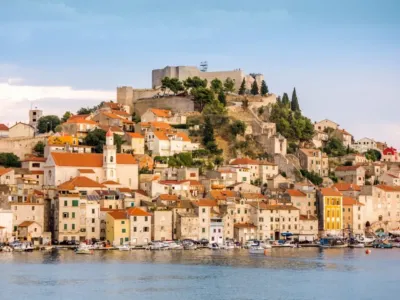
Split is a Dalmatian coastal city where Roman architecture, an active port and everyday local life occupy the same historic centre. Built around the fourth-century Palace of Diocletian, it works exceptionally well as a base for cultural touring, island excursions, coastal holidays and wider Croatian or Balkan itineraries. The city also provides a useful gateway for programmes combining Croatia with Montenegro, Bosnia and Herzegovina or other regional destinations.
The historical complex, including Diocletian’s Palace, is a UNESCO World Heritage site. Its significance lies not only in the surviving Roman structure, but also in the way homes, cafés, shops, restaurants and streets continue to function inside and around it. Travellers often value this combination of major monuments and ordinary urban life. A guided walk is worthwhile because the palace can otherwise feel like a maze of later medieval and modern layers.
Split’s main sights and city experience
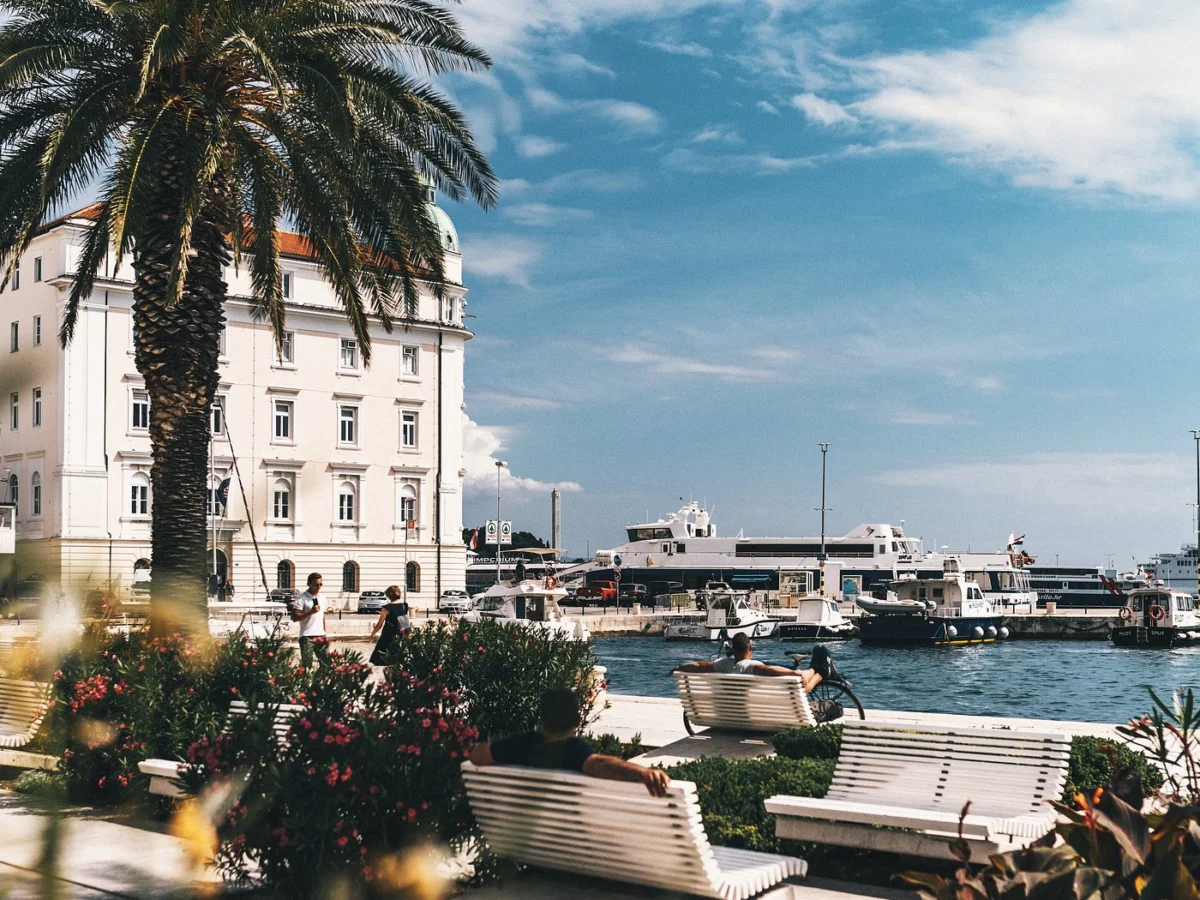
Begin at the Peristyle, the palace’s ceremonial central courtyard, then continue to the Cathedral of Saint Domnius, the Temple of Jupiter and the exceptionally preserved palace substructures. The four historic gates help orientate groups, while the Riva waterfront provides an easy transition from heritage sightseeing to café time and harbour views. The green market and fish market offer useful opportunities to introduce clients to local produce and Dalmatian food culture.
Many visitors can cover the principal old-town sights in one full day. Two nights allow a more comfortable pace, while three or four nights make room for Marjan, a beach, a boat trip or an island excursion. July and August bring the heaviest crowds, particularly around the Peristyle, Riva and cruise-ship arrivals. Early morning visits, timed guiding and shoulder-season departures usually create a more manageable experience.
Using Split in Croatian and Balkan itineraries
Split Airport is around half an hour from the city centre by road in normal conditions, although summer traffic can extend transfer times. Trogir is approximately half an hour away, Zadar around one and a half hours, Mostar about two and a half hours and Dubrovnik roughly three and a half hours by road, depending on traffic, border procedures and the route used. These rounded timings make Split practical for escorted circuits, self-drive programmes and short regional extensions.
The port supports ferry and catamaran connections to destinations including Brač, Hvar, Vis, Šolta and Korčula. Operators should confirm sailing times, vehicle restrictions and seasonal frequency before finalising an itinerary, particularly for groups travelling outside the main summer period. Ferry and catamaran schedules are useful when planning island day trips and overnight combinations.
RakiYa Travel can support travel professionals seeking a Croatia DMC, incoming tour operator or local ground-handling partner for Split and wider multi-country Balkan programmes. Services can be tailored around accommodation, private vehicles or coaches, professional guides, restaurant arrangements, attraction tickets, excursions and MICE logistics. A local operating partner is especially useful when a programme combines city sightseeing with ferries, border crossings and several countries.
Food, neighbourhoods and practical planning
Dalmatian cuisine gives the city strong appeal for food-led programmes. Seafood, grilled fish, octopus, pašticada, soparnik, local olive oil, seasonal vegetables and traditional bakeries can all be incorporated into tastings or hosted meals. Visitors often report better value and a more relaxed atmosphere in side streets and neighbourhood restaurants than directly on the busiest part of the Riva. Markets and informal konobas can add an authentic local dimension without requiring a formal gala format.
Most central sights are walkable, but polished stone, cobbles, summer heat and the climb towards Marjan make supportive footwear and water sensible advice. Central driving and parking can be stressful, so groups are usually better served by planned drop-off points and walking tours rather than repeated coach movements through the old town. Taxis and app-based rides can help with shorter transfers when local buses are inconvenient.
Best time to visit Split
Late April to June and September to October are well suited to cultural groups, sightseeing and MICE programmes, with generally milder conditions and less pressure on the historic centre than in high summer. July and August work well for beach and island holidays, but operators should allow for heat, crowds, cruise traffic and busy ferry services. Spring and autumn weather can change quickly, and sea excursions remain dependent on operational schedules and conditions.
For event planners, the city offers a compact setting where hotels, restaurants, heritage venues and waterfront spaces can be combined with team activities, boat excursions and guided cultural programmes. RakiYa can coordinate local suppliers and ground operations according to group profile, language, budget and programme objectives, while keeping the itinerary flexible enough for seasonal transport and venue considerations.
| Visa requirements | Croatia is part of the Schengen Area. Visa requirements depend on the traveller’s nationality, passport type, purpose and length of stay. Many visitors from visa-exempt countries can enter for short stays of up to 90 days in any 180-day period, while other nationalities must obtain a Schengen visa before travel. Travel professionals should check passport validity, blank-page requirements, permitted stay, travel medical insurance and any rules for minors or group documentation before confirming a programme. Travellers entering Croatia from another Schengen country normally face no routine internal border check, but passport and immigration checks can still apply in particular circumstances. Entry rules can change, so confirm current requirements with the Croatian authorities or the relevant Croatian diplomatic mission before departure. Regional itinerary considerationsRoutes combining Split with Montenegro, Bosnia and Herzegovina or Serbia may involve external Schengen borders. Check each traveller’s eligibility separately, allow time for border procedures and ensure that the itinerary does not exceed the permitted stay across the Schengen Area. Ferry operators and airlines may also apply their own document checks. |
|---|---|
| Languages spoken | Croatian is the official language; English is widely used in tourism, with Italian and German also heard in many visitor-facing services. |
| Currency used | Euro (EUR). |
| Area (km2) | Approximately 79 km². |
| Country name | Croatia |