Zagreb
Zagreb is Croatia’s inland capital, a compact Central European city where medieval Upper Town streets meet Austro-Hungarian boulevards, leafy parks and a lively café culture. It gives travel professionals a useful urban opening or closing point for Croatia programmes, while also working as a standalone city break, cultural stop or base for excursions into northern Croatia.
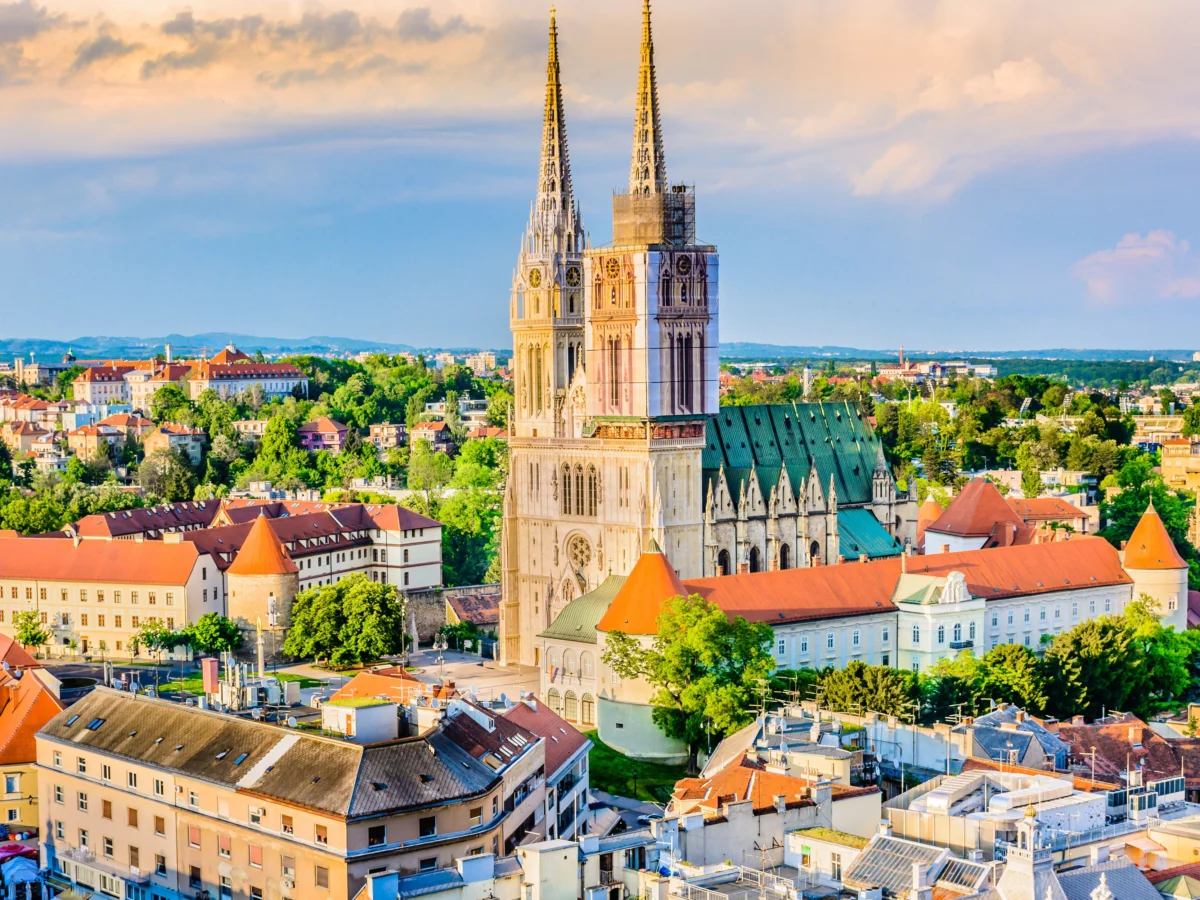
The historic centre is particularly practical for escorted groups and FIT travellers. Ban Jelačić Square, Dolac Market, the Cathedral area, the colourful roof of St Mark’s Church, Lotrščak Tower and Tkalčićeva Street are close enough to connect in a walking tour. The official city overview highlights the relationship between the Upper and Lower Town, as well as the city’s parks, museums and everyday café life. Many visitors also find that central Zagreb feels lived-in rather than staged, with residents using the same squares, terraces and pedestrian streets as visitors.
Zagreb sights and local experiences
A morning visit to Dolac Market introduces clients to local produce, seasonal trading and the rhythm of everyday life. It is a working market, so it is best presented as an authentic city experience rather than a formal attraction. Nearby, travellers can sample štrukli, a traditional baked or boiled pastry associated with northern Croatia, alongside burek, regional dishes and contemporary Croatian cuisine. Café stops are part of the local experience, especially around the main square, Tkalčićeva Street and quieter side streets.
The Upper Town rewards a guided visit focused on architecture, civic history and local stories. Its slopes, stairs and occasional uneven or cobbled surfaces should be explained in advance. The short Zagreb funicular ride between the Lower and Upper Town can add character to a programme and may help some clients, although many central sights are also easy to reach on foot. For museum-led itineraries, the Museum of Broken Relationships usually fits comfortably into one to two hours and offers an unusual, personal perspective on relationships and memory.
Itineraries, access and practical planning
Allow one full day for the principal historic centre, or two to three nights for a more rounded programme including museums, food, parks and an excursion. Mirogoj Cemetery, Maksimir Park, the Museum of Contemporary Art and Medvednica provide useful extensions beyond the central streets. Trams are practical for longer urban transfers, while private vehicles and coaches are more suitable for airport transfers, group luggage and regional touring. Central sightseeing itself is generally easiest on foot.
Zagreb Airport is roughly 30 minutes from the city centre by road, depending on traffic. Approximate driving times from regional hubs are Ljubljana two hours, Budapest three and a half hours, Belgrade four hours, Sarajevo five hours, Split four and a half hours and Dubrovnik six and a half hours. Border conditions, traffic, roadworks and seasonal congestion can change these timings, so cross-border programmes need operational checking before confirmation.
Spring and early autumn are particularly suitable for cultural touring, walking programmes and MICE events, with generally comfortable conditions for city sightseeing. Summer offers longer days and outdoor terraces, but can bring heat and higher visitor numbers; winter supports museums, Christmas-season city experiences and shorter city breaks, although cold weather and occasional snow can affect outdoor plans. RakiYa Travel can coordinate accommodation, airport transfers, private vehicles, guides, restaurants, attraction arrangements, group logistics and flexible corporate programmes in Zagreb as part of Croatia and wider Balkan itineraries. As a licensed DMC and incoming tour operator, it can also provide local ground-handling support for tailor-made and escorted programmes, subject to supplier availability and agreed requirements.
| Visa requirements | Croatia is a member of the European Union and part of the Schengen Area. Citizens of EU and EEA countries and Switzerland can generally enter Croatia with a valid national identity card or passport. Visa-exempt third-country nationals can generally visit for up to 90 days in any 180-day period across the Schengen Area, while other nationalities normally require a Schengen short-stay visa arranged before travel. Entry rules depend on nationality, passport type, purpose and length of stay. Passports should meet the current Schengen validity requirements, and travellers may be asked to show accommodation details, onward travel, sufficient funds or other supporting documents. Tour operators should verify the latest rules with the Croatian authorities or the relevant consulate before confirming a group, particularly for multi-country Balkan itineraries and clients travelling on non-standard documents. Visa requirements, border procedures and any forthcoming digital entry systems can change. RakiYa Travel can support practical itinerary coordination and document-collection processes for organised groups, but visa approval remains the responsibility of the traveller and the competent authorities. |
|---|---|
| Languages spoken | Croatian is the official language; English is widely used in tourism, with German and Italian also common in visitor services. |
| Currency used | Euro (EUR). |
| Area (km2) | Approximately 641 km². |
| Country name | Croatia |