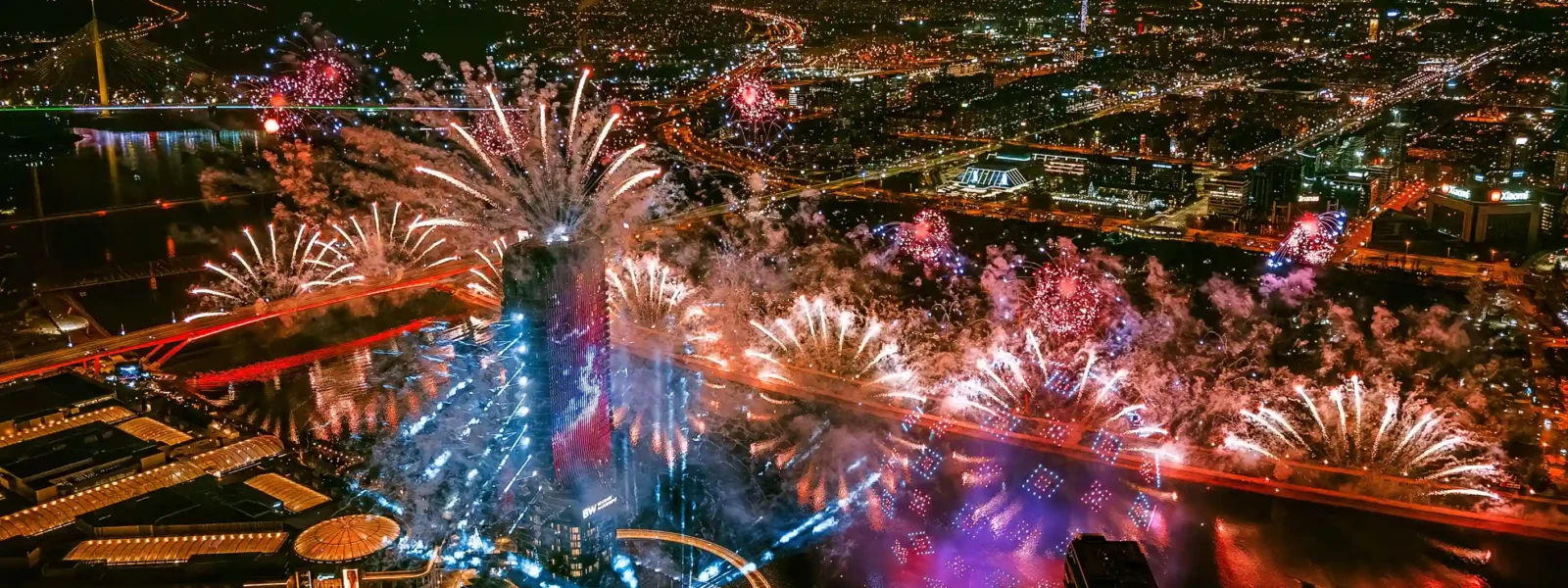
Balkans New Year’s Eve celebrations combine open-air concerts, historic city centres, traditional restaurants, winter markets and lively nightlife. For tour operators, the region offers several distinct product styles: a city break built around a public celebration, a culinary and cultural programme, a coastal winter escape or a multi-country itinerary connecting two or more capitals.
The main challenge is not finding a celebration. It is organising the details around it. Central streets become crowded, restaurants and clubs often sell fixed packages, transport after midnight can be difficult, and official programmes may be announced or changed relatively late. A successful group programme therefore needs early venue checks, realistic walking routes and a clear plan for the evening.
What tour operators should know before selling New Year’s Eve
New Year’s Eve in the Balkans is usually an event-led product rather than a standard sightseeing tour. Public concerts may be free, while restaurants, hotels and clubs normally operate with advance reservations, set menus or special entertainment packages. The exact balance varies by destination and by year.
Many travellers value the choice between an open-air celebration and a traditional restaurant or bar. Regional restaurants are often praised for local food, live music and a welcoming atmosphere. However, individual New Year’s packages vary considerably, so suppliers should be checked for menu content, seating arrangements, entertainment, drinks, service style and cancellation conditions rather than selected on reputation alone.
Popular venues can fill well in advance. Travellers frequently advise booking restaurants, club entry and organised dinners early, particularly when a group wants to stay in a historic centre or near the main square. A useful B2B quotation should state whether the New Year’s Eve dinner is included, optional or independent, and whether guests are expected to return to the hotel on foot.
- Confirm the event programme: public concerts, fireworks, children’s activities and security arrangements can change from one year to the next.
- Reserve evening venues early: ask for the full menu, drinks policy, table layout, music programme and end time.
- Plan for winter conditions: cold, fog, snow and occasional air-quality issues may affect outdoor comfort and sightseeing.
- Use central accommodation where possible: walking is often more practical than relying on taxis after midnight.
- Allow extra time for movement: road closures, pedestrian controls and crowds can delay group transfers.
- Brief clients clearly: open-air celebrations may involve queues, security checks, standing for long periods and limited access to toilets.
Belgrade: the strongest choice for nightlife and variety
Belgrade is a natural choice for clients looking for a lively urban celebration with several evening formats. Travellers commonly mention a broad choice of open-air events, restaurants, bars, clubs and traditional venues. Groups can spend the day exploring the city, have dinner in the historic Skadarlija district and then continue to a public celebration or pre-booked nightlife venue.
The Serbian capital is particularly suitable for adults, friend groups, incentive-style city breaks and clients who want flexibility after the main dinner. The official Serbian tourism information describes different New Year’s Eve formats across the country, including concerts and fireworks in Belgrade, DJ-led celebrations in Novi Sad and events in destinations such as Niš, Zlatibor and Tara.
For operators, the key issue is managing expectations. Belgrade’s nightlife is varied, but not every restaurant package offers the same standard of food or service. Travellers also report that taxis and ride services can become difficult or expensive after midnight. A central hotel, a pre-arranged vehicle for the main transfer and a clearly communicated meeting point are sensible choices for groups.
Belgrade also works well as part of a wider Serbia itinerary. A longer programme can include Novi Sad, historic heritage sites, food experiences or a winter extension outside the capital, provided road and weather conditions are checked before operation.
Novi Sad: a more compact Serbian alternative
Novi Sad suits clients who want a city celebration without the scale of Belgrade. Its historic centre, café culture and cultural venues create a manageable setting for a short break, while Petrovaradin and the Danube add interest to the daytime programme. The Serbian tourism authority highlights DJ-led celebrations and a different atmosphere from the capital.
For escorted groups, Novi Sad can be combined with Belgrade rather than sold as a completely separate product. The two cities are close enough to connect in one itinerary, although the New Year’s Eve night itself should be based in the city where the group has its dinner and celebration. Avoid promising a late-night transfer between cities unless a private vehicle, driver schedule and road conditions have been confirmed in advance.
A Novi Sad programme can appeal to couples, mature cultural travellers and smaller groups who prefer a walkable centre, restaurants and music over a large-scale club scene. It is also a useful option when Belgrade accommodation or restaurant availability is limited.
Sarajevo: winter atmosphere, food and layered history
Sarajevo offers a strong cultural framework around New Year’s Eve. Clients can combine Ottoman and Austro-Hungarian heritage, local food, cafés and museums with the public celebration. The city’s historic centre is compact enough for a walking-based evening, although steep or uneven streets, winter weather and crowd movement should be considered when selecting accommodation and meeting points.
The format of the public celebration must be checked for the specific year. For the 2025–2026 event, the City of Sarajevo published information on the celebration site, entry controls, prohibited items, medical services, traffic closures and public transport. That same notice stated that fireworks would not form part of that event, so operators should never use fireworks as a standard selling point for Sarajevo without confirming the current programme.
Many travellers describe Sarajevo as lively while still offering alternatives to clubbing. A group might choose a restaurant dinner with regional dishes and live music, visit the public celebration, then return to a central hotel on foot. Bookings should be made early, and the quality and inclusions of fixed New Year’s menus should be checked carefully.
Sarajevo is a strong entry point for a wider Bosnia and Herzegovina programme, with Mostar, Blagaj and mountain areas available for extensions. In winter, however, mountain road conditions and daylight hours may affect excursions, so a flexible cultural schedule is easier to operate than an ambitious rural circuit.
Budva: a multi-day celebration on the Montenegrin coast
Budva is suited to clients who want a festive coastal setting, open-air music and a concentrated programme over several days. For the 2026–2027 season, the official Budva programme lists a three-day celebration from 30 December to 1 January, with concerts, children’s activities and events in front of the Old Town walls.
This multi-day structure is commercially useful because it gives operators more than a single evening to build a programme around. Daytime options can include the Old Town, nearby coastal viewpoints, Kotor Bay or a food-focused experience. The timing of excursions should remain conservative: winter daylight is limited, coastal weather can change quickly and roads around the Bay of Kotor can be slow during busy periods.
Budva’s appeal is strongest for adults, couples, younger groups and clients who want music and social atmosphere rather than a formal cultural gala. At the same time, accommodation selection matters. Some properties are close enough for walking, while others require transfers that may be affected by road closures or post-midnight demand.
Operators can position the event within a broader Montenegro itinerary, perhaps linking Budva with Kotor, Perast or the northern mountains. Confirm winter operating conditions for boat excursions, cable cars and mountain attractions before including them as fixed inclusions.
Dubrovnik: historic surroundings and a more curated format
Dubrovnik provides a distinctive New Year’s Eve setting for clients who value historic architecture, a compact old town and cultural programming. The official Advent programme includes New Year’s Eve concerts on Stradun, children’s celebrations and a New Year concert by the Dubrovnik Symphony Orchestra.
The city works well for couples, cultural groups, mature travellers and shorter escorted programmes. The Old Town setting is visually strong, but it can also become crowded. Guests should know whether they are attending a standing outdoor event, a reserved dinner or a concert with allocated seating. Group leaders should establish a meeting point outside the busiest pedestrian areas because mobile reception and visibility can become unreliable in dense crowds.
Dubrovnik is also practical for a coastal multi-country itinerary, although border crossings and winter road conditions need realistic timing. A programme can combine the city with Montenegro or Bosnia and Herzegovina, but the route should not be overfilled around 31 December and 1 January. Clients generally benefit from staying at least two nights rather than arriving only for the evening.
For partners developing a wider Croatian product, Croatia programmes can extend beyond Dubrovnik to Split, Zagreb or national-park areas, subject to seasonal opening periods and transport planning.
Zagreb: Advent, concerts and a central European city break
Zagreb suits travellers who want a longer festive-season break rather than a programme focused only on midnight. The city’s Advent season for 2026–2027 is scheduled from 28 November 2026 to 7 January 2027, with cultural, family, gastronomic and New Year’s events. This creates scope for two- to four-night programmes with markets, museums, cafés and evening entertainment.
The central location of many activities makes Zagreb convenient for independent exploration and small escorted groups. Nevertheless, operators should distinguish between market visits, public events and reserved hospitality. A free city-centre celebration does not automatically provide a sheltered viewing area, seating or a group dining solution.
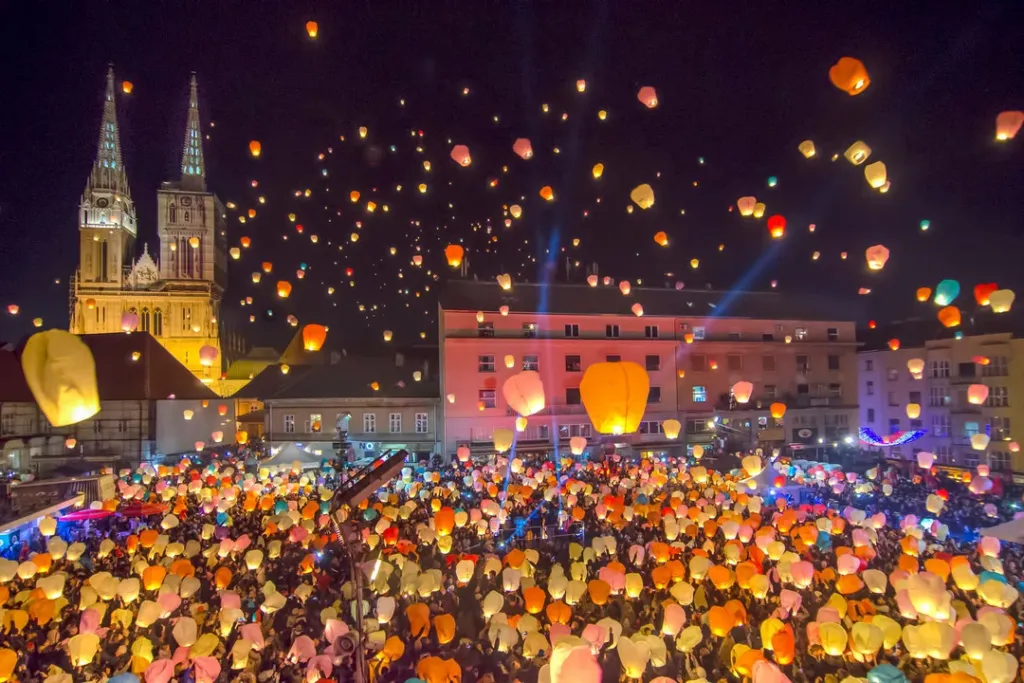
For clients travelling with children or mixed-age groups, Zagreb’s family programming can be more suitable than a club-led destination. For adults, the same city can be sold through gastronomy, live music, cultural visits and a planned New Year’s Eve dinner. The photograph of a crowded evening celebration beneath Zagreb Cathedral illustrates the atmosphere operators should describe accurately: festive and accessible, but potentially busy and exposed to winter weather.
Tirana: an urban Albanian base for food, culture and nightlife
Tirana offers a flexible Albanian setting for clients who want a city break combining food, culture and nightlife. The capital works well for a short New Year programme, with daytime visits, restaurants, cafés and evening entertainment arranged around the city centre. Operators should confirm the current public celebration, venue schedules and traffic arrangements before presenting specific events as inclusions.
Tirana can suit adults, couples, small groups and clients who prefer an urban base rather than a coastal or mountain setting in winter. A central hotel and pre-booked restaurant make the evening easier to manage, while museums, heritage visits and culinary activities provide useful alternatives if outdoor plans are affected by cold or rain.
RakiYa Travel’s New Year in Albania 2027 programme is a five-day itinerary featuring Tirana, Berat and Kruja, with an authentic local experience and a New Year’s Eve gala dinner. It can provide a starting point for partners seeking a ready-made Albanian New Year product, subject to reconfirming the programme details and operating arrangements.
For a broader itinerary, Tirana can be combined with other Albanian destinations or linked to a wider Balkan route. Winter road conditions, attraction opening times and realistic transfer schedules should be checked before adding longer excursions.
How to build a sellable Balkan New Year programme
The most reliable product structures are simple. A two- or three-night city break allows time for arrival, orientation, a flexible daytime programme and the main celebration. A longer multi-country itinerary can work when the route follows sensible geography and does not require a major border crossing on New Year’s Eve itself.
- Choose the celebration style first. Decide whether the product is centred on a public concert, traditional dinner, ticketed performance, nightlife or a family-friendly programme.
- Base the group close to the evening venue. Walking access reduces dependence on taxis and makes the return journey easier to manage.
- Keep 31 December daytime flexible. Use a short guided visit, market time or a relaxed meal rather than a long excursion that risks late returns.
- Confirm every paid inclusion. Check whether drinks, midnight toast, entertainment, transfers, service charges and taxes are included in the New Year’s package.
- Prepare a crowd and safety briefing. Explain entry points, prohibited items, emergency contacts, meeting locations and what to do if guests become separated.
- Build a weather contingency. Museums, culinary activities and indoor cultural venues can protect the programme if cold, fog or snow affects outdoor sightseeing.
A local DMC can add value by coordinating hotels, restaurants, private vehicles, guides, event information and group movements through one operational plan. For a multi-country itinerary, the benefit is also consistency between destinations: one partner can help align routing, supplier communication and on-the-ground support across the programme.
Which destination is right for which client?
| Destination | Best suited to | Key planning point |
|---|---|---|
| Belgrade | Nightlife, adults, flexible city breaks | Book venues early and plan the return journey |
| Novi Sad | Compact cultural breaks and smaller groups | Keep the celebration city-based after dinner |
| Sarajevo | Food, history and winter city atmosphere | Check the current public programme and traffic plan |
| Budva | Coastal celebrations and music-led programmes | Use the official multi-day schedule and allow for winter roads |
| Dubrovnik | Cultural travellers and historic-city breaks | Manage Old Town crowds and clarify event format |
| Zagreb | Families, markets and longer festive breaks | Combine Advent activities with a pre-booked dinner |
| Tirana | Food, culture and urban Albanian city breaks | Confirm the current public programme and venue availability |
There is no single best New Year’s Eve destination for every market. Belgrade is a strong fit for nightlife and choice, Sarajevo for history and food, Budva for a coastal multi-day celebration, Dubrovnik for a more curated historic setting, Zagreb for Advent-led family and cultural travel, and Tirana for an urban Albanian programme. The right choice depends on client age, budget, preferred entertainment, walking tolerance and appetite for crowds.
RakiYa Travel is a licensed DMC supporting international tour operators and travel agencies with tailor-made and escorted programmes across Albania and the wider Balkans, including accommodation, transportation, guiding, activities and local coordination. Multi-country Balkan group planning is most effective when the celebration city, routing and operational responsibilities are agreed early.
Contact RakiYa Travel through the website to discuss a New Year’s Eve programme, request a quotation or explore a regional B2B partnership. You can also send an enquiry to info@rakiyatravel.com.