
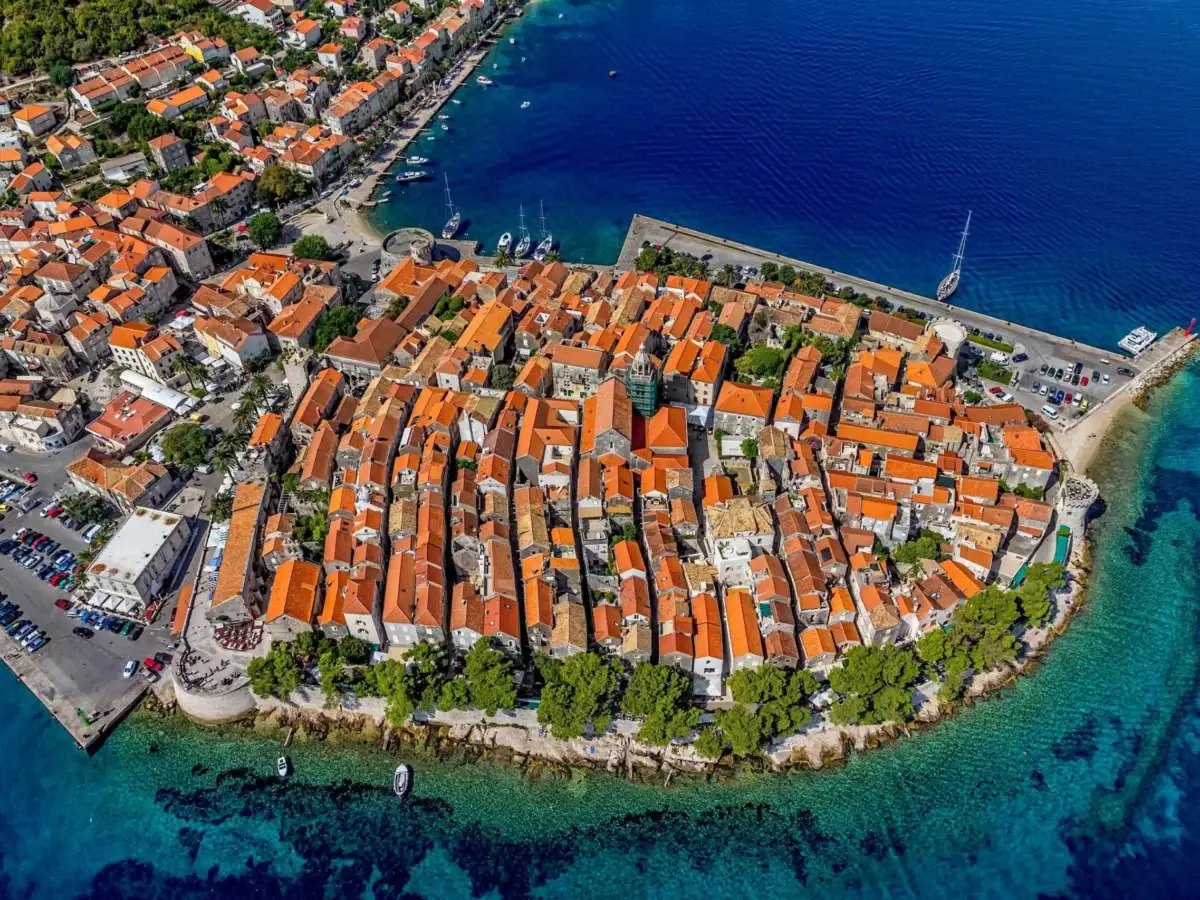
Hvar
Hvar is a versatile Dalmatian island that combines historic stone towns, clear Adriatic waters, vineyards, inland villages and a lively waterfront scene. For travel professionals, it works as a coastal highlight within a Croatia circuit, a relaxed island stay after cultural touring, or a focused destination for private and small-group programmes.
Most programmes use Hvar Town, Stari Grad or both as bases. Hvar Town offers a compact historic centre, atmospheric harbour walks, restaurants and access to boat excursions. Stari Grad has a quieter character, with ancient streets, local farms and direct access to the island’s agricultural landscapes. Jelsa and Vrboska add smaller-scale coastal experiences, while inland villages are suitable for food, wine and lavender-focused excursions.
Hvar highlights for travel programmes
Key visits include Hvar Town’s Venetian-influenced architecture, the Cathedral of St Stephen, the waterfront loggia and the hilltop Fortica fortress. The climb to Fortica is steep in places, but many visitors consider the panoramic view worthwhile. An early morning or late-afternoon visit is more comfortable during summer, when the heat and strong sun can make the ascent demanding.
The Stari Grad Plain is a UNESCO World Heritage site and remains a working agricultural landscape. Its ancient Greek land division, dry-stone walls, vineyards and olive groves provide a strong basis for guided cultural walks, cycling, wine visits and locally focused excursions. Hvar’s culinary identity also includes fresh seafood, olive oil, island herbs, seasonal produce and regional wines. Tastings and family-run dining can give groups a more grounded experience than a standard sightseeing stop.
Access planning is important. Fast ships connect Split with Hvar Town, while the car ferry from Split arrives at Stari Grad and takes approximately 120 minutes; current Split–Hvar sailing times and fares should be checked before confirming an itinerary. The distinction between the two arrival points matters when selecting hotels and arranging transfers. Hvar Town is generally manageable without a car, but a vehicle, taxi, scooter or organised excursion is useful for Stari Grad, Jelsa, Vrboska and inland areas.
Planning Hvar within a Croatia itinerary
Allow two or three nights for a balanced programme, or longer for a dedicated coastal holiday. A practical route can combine Split, Hvar and Dubrovnik, with the island positioned between mainland cultural visits. Split to Hvar Town is approximately one hour by fast ship, subject to the current operating schedule. The car-ferry crossing to Stari Grad is approximately two hours, followed by island transfers. Travel times from Dubrovnik depend on the chosen ferry and road combination, so connections should be confirmed for the operating season rather than assumed.
Hvar suits FIT travel, private and escorted groups, self-drive holidays, food and wine programmes, coastal breaks, active itineraries and selected corporate incentives. Hvar Town’s walkable centre, boat access and range of restaurants can support small MICE groups, while RakiYa Travel can coordinate accommodation, ferries, private vehicles, guides, activities, restaurants and local event logistics as a Croatia DMC and incoming tour operator. For wider routing, partners can also review RakiYa’s Croatia Grand Circuit Tour as an example of combining Hvar with Split, Dubrovnik and other Croatian highlights.
May, June and September are often practical months for cultural touring, walking and outdoor activities. July and August provide the strongest beach atmosphere but are also the busiest period, with crowded waterfronts, higher visitor demand and heavier pressure on accommodation and transport. Travellers frequently describe the shoulder season as calmer, although some businesses and transport services operate less frequently. Beaches are commonly pebbly or rocky rather than sandy, and water shoes are useful for uneven entries and stones.
Local coordination and operational advice
RakiYa Travel provides tailor-made destination management, group-tour support and ground handling across Croatia and the wider Balkans. On Hvar, programmes can be adapted around ferry schedules, hotel location, group mobility, language requirements and the balance between heritage, swimming, gastronomy and free time. The island is especially effective when the itinerary allows a measured pace rather than trying to cover every settlement in one day.
For cruise-related planning, Hvar can also be used as a carefully timed Adriatic stop, with port transfers, guides and shore experiences coordinated around vessel movements. RakiYa’s Adriatic and Balkan shore-excursion planning provides a relevant framework for partners considering this format. Accommodation, restaurant and ferry availability should be requested early for July and August, particularly for groups and incentive travel.
| Visa requirements | Hvar is part of Croatia, which is a member of the Schengen Area. Visa and entry requirements depend on the traveller’s nationality, passport type, purpose of travel and length of stay. Travellers who require a Schengen visa should normally apply through the appropriate Croatian or other Schengen representation according to the main destination and itinerary. Travel professionals should check current requirements before confirming a programme, including passport validity, visa conditions, permitted stay, travel insurance requirements and any rules affecting minors or group documentation. Croatia’s entry rules and carrier requirements can change, so operators should verify the latest information with the relevant Croatian authorities and consular services for every nationality represented in the group. |
|---|---|
| Languages spoken | Croatian is the official language; English is widely used in tourism, with Italian and German also encountered. |
| Currency used | Euro (€), Croatia’s official currency. |
| Area (km2) | Approximately 297 km² for Hvar Island. |
| Country name | Croatia |