Balkans Pilgrimage Tours: Religious Heritage & B2B Planning Guide
Balkans pilgrimage tours offer international travel agencies and specialist tour operators opportunities to develop journeys connecting Catholic pilgrimage sites, Orthodox monasteries, Islamic heritage, historic religious communities and culturally significant destinations across southeastern Europe.
From Mother Teresa’s Albanian heritage and the Marian sanctuary of Medjugorje to the medieval monasteries of Kosovo, the historic churches of Ohrid, Sarajevo’s Islamic traditions and the Orthodox Easter celebrations of Corfu, the Balkans offer an exceptionally diverse religious heritage landscape.
For travel agencies, this diversity makes it possible to develop Catholic pilgrimage programmes, Orthodox Christian heritage journeys, halal-friendly holidays and educational interfaith itineraries.
RakiYa Travel, an Albania-based Destination Management Company (DMC) working exclusively with international travel agencies and tour operators, develops cultural, religious and tailor-made programmes across Albania and selected Balkan destinations.
This guide explores the region’s principal religious destinations, suggested multi-country itineraries and practical considerations for organising specialist religious travel.
Why Choose the Balkans for Religious and Pilgrimage Tourism?
The Balkans have been shaped by centuries of interaction between Eastern and Western Christianity, Islamic traditions and Jewish communities.
This history remains visible in Catholic cathedrals, Orthodox monasteries, Ottoman mosques, pilgrimage sanctuaries, historic synagogues and living religious communities.
For international tour operators, four types of religious travel programmes are particularly relevant:
- Catholic pilgrimage tours: Mother Teresa heritage, Letnica Sanctuary, Medjugorje, Shkodër and Adriatic Catholic traditions.
- Orthodox Christian heritage tours: Monasteries and historic churches in Greece, Serbia, Kosovo, Montenegro and North Macedonia.
- Islamic heritage and halal-friendly tours: Sarajevo, Mostar, Blagaj, Prizren, Skopje and destinations associated with Ottoman and Islamic culture.
- Interfaith cultural journeys: Programmes exploring religious coexistence, architecture, social history and the traditions of different communities.
Religious heritage tourism should not automatically be treated as pilgrimage. Some travellers seek worship, prayer and spiritual reflection, while others are primarily interested in culture, history, architecture and traditional communities.
Travel agencies should establish the group’s purpose before selecting destinations and services.
1. Albania: Mother Teresa, Catholic Heritage and Religious Coexistence
Albania provides a distinctive introduction to religious heritage in the Balkans.
Its cultural landscape includes Catholic, Orthodox, Sunni Muslim and Bektashi traditions, alongside a significant history of religious suppression and recovery during and after the communist period.
Mother Teresa and Albanian Heritage
Saint Mother Teresa, born Gonxhe Bojaxhiu in Skopje in 1910 to an Albanian Catholic family, is among the most internationally recognised figures associated with Albanian heritage.
Although born in present-day North Macedonia, her family background and spiritual legacy connect her story to Albania, Kosovo and the wider region.
In Tirana, Mother Teresa Square and St Paul’s Cathedral provide opportunities to introduce travellers to her significance in contemporary Albanian society.
For agencies interested in a dedicated itinerary, RakiYa Travel’s GONXHE: The Untold Story of Mother Teresa is a seven-day Signature Journey connecting Albania, Kosovo and North Macedonia.
The programme explores Catholic heritage, cultural identity, Mother Teresa’s early life and destinations associated with her spiritual journey.
Shkodër: Catholic Heritage and Faith Under Communism
Shkodër has long been an important centre of Albanian Catholic culture.
St Stephen’s Cathedral is a significant landmark, while the Site of Witness and Memory introduces visitors to religious persecution during Albania’s communist dictatorship.
In 1967, Albania’s communist government intensified its suppression of organised religion, closing religious institutions and restricting public religious practice.
For educational and pilgrimage groups, Shkodër offers an opportunity to explore the history of faith, repression and religious resilience.
Travel agencies interested in this historical dimension can also explore RakiYa Travel’s The Forbidden Albania historical programme.
Orthodox and Islamic Heritage in Albania
Albania’s religious heritage extends beyond Catholic traditions.
Ardenica Monastery, the historic churches of Berat, and the Orthodox heritage of Korçë and Voskopoja offer opportunities to explore Byzantine and post-Byzantine Christianity.
Tirana’s Et’hem Bey Mosque, historic mosques in Berat and Albania’s Bektashi traditions provide complementary perspectives on Islamic and Sufi religious history.
For organised cultural groups, carefully designed itineraries can introduce these different traditions while providing historical context and respecting the communities associated with each site.
Orthodox Easter in Korçë
Korçë is another interesting destination for programmes exploring living Orthodox Christian traditions in southeastern Albania.
The city’s churches, religious observances and connections with nearby Voskopoja offer opportunities for heritage and cultural travel.
RakiYa Travel offers a Celebrate Orthodox Easter in Korçë programme combining religious traditions, regional culture and local experiences.
2. Kosovo: Letnica, Mother Teresa and Medieval Monasteries
Kosovo has an important place in Catholic pilgrimage journeys associated with Mother Teresa, medieval Orthodox Christian history and Ottoman-era Islamic heritage.
Letnica Sanctuary: Mother Teresa’s Spiritual Vocation
Letnica is a Marian pilgrimage destination associated with the early spiritual development of Gonxhe Bojaxhiu.
According to religious tradition, visits to Letnica were important in the development of her vocation.
Today, the sanctuary can be incorporated into Catholic pilgrimage programmes with time for prayer, reflection and an introduction to local religious history.
Mass or other religious services should be requested in advance through the appropriate church authorities.
Pristina and Prizren
In Pristina, the Cathedral of Saint Mother Teresa honours her life and spiritual legacy.
Prizren presents another dimension of Kosovo’s religious history, combining historic churches, mosques, traditional neighbourhoods and Ottoman-era architecture.
These destinations can form part of Mother Teresa journeys or broader cultural programmes exploring the interaction of different religious traditions.
Medieval Orthodox Monasteries
Kosovo contains important medieval Orthodox monuments, including Visoki Dečani, Gračanica, the Patriarchate of Peć and the Church of the Virgin of Ljeviš.
These monuments form the UNESCO-listed Medieval Monuments in Kosovo.
They are relevant to Orthodox Christian heritage tours, medieval history groups and educational programmes.
Visitor access, security arrangements, photography restrictions and the requirements of active religious communities should be checked before confirming excursions.
Islamic Heritage in Kosovo
Kosovo also offers important Islamic cultural heritage.
Prizren’s Sinan Pasha Mosque, historic mosques in Pristina and religious architecture in other towns reflect centuries of Ottoman cultural influence.
These destinations can be incorporated into Islamic heritage, interfaith and halal-friendly cultural programmes.
3. North Macedonia: Mother Teresa’s Birthplace and Ohrid’s Christian Heritage
North Macedonia is central to Mother Teresa’s early life and the wider religious history of the Balkans.
Skopje: Where Gonxhe’s Story Began
Skopje is the birthplace of Gonxhe Bojaxhiu, later known worldwide as Mother Teresa.
The Mother Teresa Memorial House provides an introduction to her family background, childhood and spiritual development.
Specialist itineraries can combine the memorial with guided visits exploring the city’s historic religious communities and multicultural heritage.
Ohrid: Ancient Christian Heritage
Ohrid is among the most significant historic Christian centres in the Balkans.
The Church of St Sophia, St Panteleimon at Plaošnik and the Church of St John at Kaneo are important landmarks in its religious and architectural history.
The UNESCO Natural and Cultural Heritage of the Ohrid Region recognises the area’s exceptional cultural and natural significance.
Ohrid is particularly suitable for Orthodox heritage groups, educational travel and itineraries exploring medieval Christian art and religious scholarship.
Islamic Heritage in Skopje and Tetovo
Skopje’s Old Bazaar, Mustafa Pasha Mosque and surviving Ottoman monuments provide opportunities for Islamic cultural touring.
In Tetovo, the Painted Mosque is distinguished by its decorative architecture and painted interior.
These destinations can be combined with local gastronomy, traditional markets and historical sightseeing.
4. Montenegro: Orthodox Pilgrimage and Adriatic Catholic Heritage
Montenegro combines important Orthodox pilgrimage destinations with a long history of Catholic communities along the Adriatic coast.
Kotor and Catholic Heritage
Kotor is an important destination for cultural and religious heritage programmes.
Its Cathedral of St Tryphon is among the principal Catholic monuments on the Montenegrin coast.
Churches, maritime religious traditions and historic architecture throughout the Bay of Kotor create opportunities to combine faith-based visits with cultural discovery.
The UNESCO Natural and Culturo-Historical Region of Kotor provides authoritative background on the area’s heritage.
Ostrog and Cetinje Monasteries
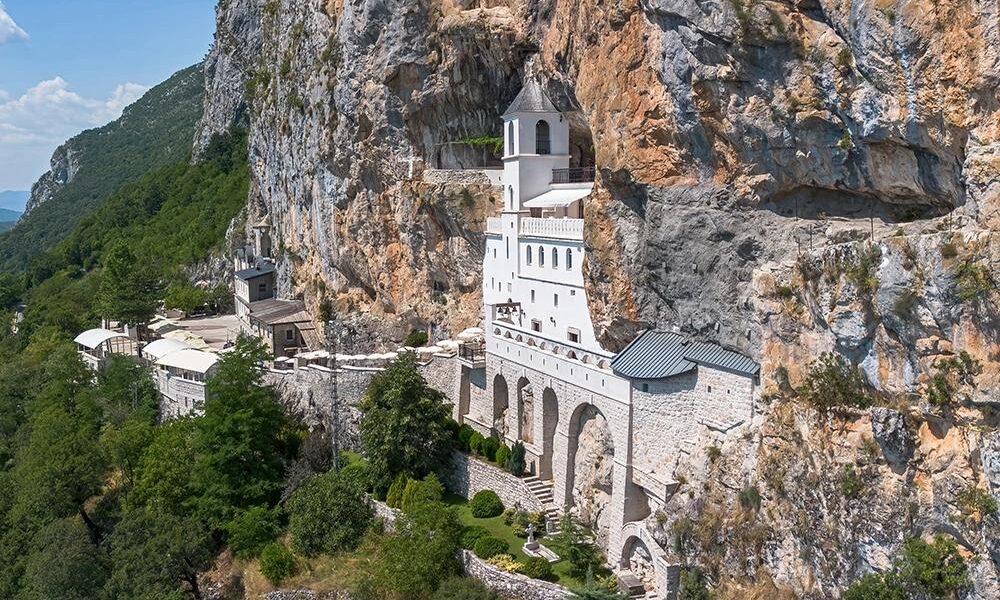
Ostrog Monastery, set dramatically into a mountainside, is among Montenegro’s most renowned Orthodox pilgrimage destinations.
Associated with Saint Basil of Ostrog, it attracts pilgrims and cultural visitors from different religious backgrounds.
Cetinje Monastery provides another important introduction to Montenegro’s Orthodox traditions and historical identity.
For group tour planning, road conditions, walking access, dress requirements and religious schedules should be assessed before confirming visits.
Islamic Heritage in Montenegro
Ulcinj, Plav and Gusinje preserve aspects of Montenegro’s Muslim cultural heritage.
These destinations can be incorporated into regional cultural itineraries connecting Montenegro with Albania, Kosovo or Bosnia and Herzegovina.
5. Greece: Orthodox Easter in Corfu and Religious Heritage
Greece is an important destination for Orthodox Christian pilgrimage and religious heritage tourism.
Its historic churches, monasteries, religious festivals and centuries-old traditions create opportunities for specialist cultural and faith-based travel.
For regional Balkan itineraries, Corfu is particularly interesting because of its Orthodox Easter celebrations and proximity to southern Albania.
Corfu Orthodox Easter: Religious Traditions and Living Heritage
For more historical and cultural context, read our
guide to Orthodox Easter traditions in Corfu
, including the island’s processions, music and
Holy Week celebrations.
Orthodox Easter in Corfu is among the island’s most distinctive annual cultural and religious celebrations.
During Holy Week, churches, local communities and Corfu’s historic streets become the setting for religious processions, music and traditional ceremonies.
The celebrations combine Orthodox Christian observances with distinctive local customs and musical traditions.
What Are the Main Easter Traditions in Corfu?
- Saint Spyridon Processions: Religious observances associated with Corfu’s patron saint, accompanied by the island’s musical traditions.
- Good Friday Epitaphios Processions: Solemn processions through Corfu Town, accompanied by local choirs and philharmonic bands.
- Holy Saturday Botides: The famous tradition of throwing large clay pots from balconies during the First Resurrection celebrations.
- Midnight Resurrection: Candlelit religious services, church bells and traditional Easter celebrations.
- Easter Sunday: Religious observances, family gatherings and traditional Greek Easter cuisine.
These traditions are described by the Greek National Tourism Organisation’s official guide to Easter in Greece.
For international travel agencies, Corfu’s celebrations offer opportunities to develop cultural short breaks, Orthodox heritage programmes and special-interest group tours.
When Is Orthodox Easter in Corfu in 2027?
Orthodox Easter Sunday falls on 2 May 2027.
The principal dates for planning include:
- Friday 30 April: Good Friday religious observances and Epitaphios processions.
- Saturday 1 May: Holy Saturday traditions, including Botides and the midnight Resurrection celebrations.
- Sunday 2 May: Orthodox Easter Sunday.
For international tour operators, accommodation, guiding, transport and restaurant arrangements should be coordinated in advance because Easter is a significant celebration on the island.
The precise programme of religious events and public celebrations should be verified locally for the relevant year.
Combine Corfu Orthodox Easter with Albania and Butrint
Corfu’s proximity to Sarandë makes it possible to combine Greek Orthodox Easter traditions with cultural and archaeological experiences in southern Albania.
A cross-border programme may include:
- Guided sightseeing in Corfu Old Town.
- Historic churches and religious sites associated with Saint Spyridon.
- Traditional Easter celebrations and processions.
- Ferry connections between Corfu and Sarandë.
- A guided excursion to the ancient archaeological site of Butrint.
- Selected cultural or coastal experiences in southern Albania.
Butrint is recognised by UNESCO for its archaeological significance and historical layers, including Greek, Roman, Byzantine and Venetian heritage.
Further historical information is available through the UNESCO World Heritage listing for Butrint.
Corfu Easter 2027: A Four-Day Tour with Albania
RakiYa Travel has developed a Corfu Easter 2027: Four-Day Tour with Albania and Butrint for international travel agencies and tour operators.
The programme is designed around the Easter period, combining cultural sightseeing in Corfu with a cross-border visit to southern Albania.
Travel agencies can adapt the programme according to group size, flight arrangements, accommodation requirements and available services.
Ferry schedules, port formalities, religious event timings and guiding arrangements should be verified before confirming the itinerary.
Why Corfu Works for Religious and Cultural Group Tours
Corfu is particularly suitable for programmes combining Orthodox Christian heritage with wider cultural exploration.
Its religious traditions, historic architecture, cultural identity and connections with southern Albania support both standalone island programmes and cross-border Balkan extensions.
For travel agencies, the destination can appeal to religious associations, cultural groups and travellers interested in living traditions rather than conventional sightseeing alone.
6. Bosnia and Herzegovina: Medjugorje, Sarajevo and Interfaith Heritage
Bosnia and Herzegovina offers a diverse religious tourism landscape, including Catholic pilgrimage, Orthodox Christianity, Islamic traditions and Jewish heritage.
Medjugorje: Catholic Pilgrimage and Prayer
Medjugorje is an internationally recognised destination for Catholic pilgrimage and prayer.
Programmes commonly incorporate St James Church, prayer services, Eucharistic adoration and visits associated with the reported Marian apparitions.
In September 2024, the Vatican issued a nihil obstat concerning the spiritual experience connected with Medjugorje, permitting public devotion and recognising positive spiritual fruits.
This decision did not establish the supernatural authenticity of the reported apparitions.
The distinction is explained in the Vatican’s official document, The Queen of Peace: Note on the Spiritual Experience Connected with Medjugorje.
For Catholic pilgrimage organisers, Medjugorje can serve as the principal destination of a programme or form part of a wider itinerary incorporating Mostar, Kotor, Shkodër and other religious landmarks.
Mostar and Blagaj: Cultural and Islamic Heritage
Mostar brings together Catholic, Orthodox and Islamic heritage within a distinctive historical setting.
The city’s mosques, churches and historic neighbourhoods can be explored alongside the Old Bridge.
Nearby Blagaj Tekke, associated with Sufi religious traditions, offers another perspective on the Islamic history of Bosnia and Herzegovina.
These locations are suitable for cultural groups, interfaith educational programmes and selected halal-friendly itineraries.
Sarajevo: Islamic Heritage and Religious Diversity
Sarajevo combines Ottoman Islamic heritage with Catholic, Orthodox and Jewish historical traditions.
Baščaršija, the city’s historic commercial quarter, provides a useful starting point for exploring its cultural and religious history.
Important Islamic heritage sites include:
- Gazi Husrev-beg Mosque.
- Emperor’s Mosque.
- Baščaršija and its traditional Ottoman-era streets.
- Historic institutions associated with Islamic education and community life.
Guided programmes can also explore Sarajevo’s cathedral, Orthodox churches and Jewish heritage.
Halal-Friendly Balkans Tours: A Distinct Travel Opportunity
Halal-friendly travel should be distinguished from traditional religious pilgrimage.
Many Muslim travellers seek leisure holidays, nature experiences and cultural journeys that accommodate specific dietary, religious and privacy requirements.
The Balkans can support such programmes, particularly in destinations including Sarajevo, Mostar, Prizren, Skopje, Tirana and selected Montenegrin towns.
What Should a Halal-Friendly Programme Include?
- Halal dining: Restaurants and catering suppliers assessed against the group’s agreed dietary requirements.
- Prayer arrangements: Schedules allowing suitable opportunities for daily prayer.
- Accommodation: Hotels selected according to family comfort, privacy and requested facilities.
- Private transportation: Appropriate vehicles and flexible group arrangements.
- Family experiences: Suitable cultural, recreational and nature-based activities.
- Ramadan and Eid arrangements: Adjusted meals and operating schedules where relevant.
Halal-friendly and halal-certified are not equivalent terms. A restaurant may provide meals considered suitable by a group without holding formal certification.
Tour operators should confirm customer requirements and verify suppliers before making any specific service promise.
7. Serbia: Orthodox Monasteries and Islamic Heritage
Serbia contains important Orthodox Christian destinations, alongside historic Islamic communities and religious architecture.
Studenica and Žiča Monasteries
Studenica Monastery, founded in the late twelfth century, is one of Serbia’s most significant medieval Orthodox religious complexes.
Its historic churches and frescoes are recognised through the UNESCO Studenica Monastery World Heritage listing.
Žiča Monastery provides another important connection to Serbian Orthodox history and medieval kingship.
Both can be incorporated into religious, cultural and educational itineraries, subject to visiting arrangements.
Belgrade and the Church of Saint Sava
Belgrade offers opportunities to explore Orthodox Christianity through its religious landmarks and wider cultural history.
The Church of Saint Sava is among the city’s best-known religious sites.
Novi Pazar and Islamic Cultural Heritage
Novi Pazar and the wider Sandžak region preserve a distinctive Islamic and Bosniak cultural heritage.
Historic mosques, traditional neighbourhoods and local gastronomy provide opportunities for cultural and faith-conscious travel programmes.
Suggested Multi-Country Balkans Pilgrimage Itineraries
International travel agencies can develop religious heritage programmes around the interests of particular communities and source markets.
The following are indicative itinerary concepts rather than confirmed departure calendars.
1. Mother Teresa and Catholic Heritage — 7 Days
Countries: Albania, Kosovo and North Macedonia.
Highlights: Tirana, Krujë, Shkodër, Prizren, Pristina, Letnica, Skopje and Ohrid.
This journey explores Mother Teresa’s Albanian background, the Catholic heritage of northern Albania, Letnica Sanctuary and her birthplace in Skopje.
Recommended for: Catholic pilgrimage organisers, religious associations, cultural groups and specialist tour operators.
Explore the complete GONXHE Signature Journey.
2. Medjugorje and Adriatic Catholic Heritage — 7–9 Days
Countries: Bosnia and Herzegovina, Montenegro and Albania, with an optional Croatia extension.
Suggested route: Medjugorje – Mostar – Kotor – Shkodër – Tirana.
This programme combines the devotional experience of Medjugorje with coastal religious heritage and Albania’s history of religious resilience.
Dubrovnik can be added where flight arrangements and available travel days permit.
3. Orthodox Christian Heritage of the Balkans — 9–12 Days
Countries: Selected combinations of Serbia, Kosovo, Montenegro and North Macedonia.
Potential highlights: Belgrade, Studenica, selected medieval monasteries, Ostrog, Skopje and Ohrid.
The programme focuses on Orthodox religious heritage, monastic traditions, sacred architecture and medieval religious art.
Final routing must account for border-entry rules, monastery access, driving distances and the physical requirements of the group.
4. Corfu Orthodox Easter and Southern Albania — 4 Days
Countries: Greece and Albania.
Suggested dates: 29 April – 2 May 2027.
Highlights: Corfu Old Town, Orthodox Easter traditions, Holy Saturday celebrations, Sarandë and Butrint.
This cultural short break introduces travellers to Corfu’s Easter celebrations while incorporating a visit to southern Albania.
Recommended for: Cultural tour operators, religious associations, specialist groups and travel agencies developing seasonal short-break programmes.
Explore the Corfu Easter 2027 Tour with Albania and Butrint.
5. Sarajevo and the Halal-Friendly Western Balkans — 8–10 Days
Countries: Bosnia and Herzegovina, Montenegro and Albania.
Suggested route: Sarajevo – Mostar – Blagaj – Kotor – Ulcinj – Shkodër – Tirana.
This journey combines Islamic heritage, regional gastronomy, scenic landscapes and selected family-friendly experiences.
Accommodation, dining and privacy arrangements can be adapted according to the agreed requirements of the group.
6. Religious Coexistence and Balkan Heritage — 9–12 Days
Countries: Selected combinations of Albania, Kosovo, North Macedonia, Montenegro and Bosnia and Herzegovina.
This educational itinerary explores historical relationships between Catholic, Orthodox, Muslim and Jewish communities.
It can incorporate religious monuments, museums, historical interpretation and opportunities for respectful cultural exchange.
Operational Planning for Religious Group Tours
Religious tourism programmes often require additional coordination beyond conventional cultural sightseeing.
Religious Services and Local Permissions
Catholic Mass, prayer services and special church visits should be coordinated in advance with the relevant religious authorities.
Orthodox monastery visits should respect worship schedules, dress requirements, photography restrictions and the privacy of resident communities.
No private religious service or special-access arrangement should be described as confirmed until the relevant institution has approved it.
Accommodation and Transport
Hotel selection should reflect group size, rooming arrangements, location, coach access, dining requirements and the preferences of the source market.
In religious destinations, pilgrimage dates and major festivals can affect accommodation availability.
Ground transportation should be planned around realistic driving distances, border formalities and the requirements of the group.
Mobility and Accessibility
Religious heritage tours may involve travellers with different fitness levels or mobility requirements.
Historic streets, monastery steps, pilgrimage hills and uneven walking surfaces should be clearly communicated before travel.
Alternative arrangements may be necessary where individual sites are not easily accessible.
Cross-Border Travel Documents
Multi-country itineraries require nationality-specific checks covering visas, passports, entry conditions and permitted border routes.
Travel involving Serbia and Kosovo requires particular attention to entry history, direction of travel and the planned crossing points.
These requirements should be verified for the actual travellers before international flights and ground arrangements are finalised.
Responsible Religious Heritage Interpretation
Specialist guides should present historical information accurately and respectfully, distinguishing documented historical events from matters of religious belief.
Locations associated with persecution, conflict or religious suffering should be approached with particular care.
This is especially important for educational and interfaith programmes.
Why Work with a Local Balkans DMC for Religious Tours?
For international travel agencies, developing a successful religious heritage itinerary requires knowledge of local customs, transport arrangements, accommodation, religious sites and group expectations.
A local Destination Management Company can help coordinate the different elements of a multi-country programme.
RakiYa Travel develops B2B cultural and religious itineraries across Albania and selected Balkan destinations, with services that can include:
- Multi-country pilgrimage and heritage itinerary design.
- Private group transportation and transfers.
- Hotel and accommodation coordination.
- Local cultural and specialist guiding.
- Visits to churches, monasteries, mosques and historic sites.
- Advance requests for religious services.
- Halal-friendly dining and accommodation sourcing.
- Private and tailor-made travel programmes.
- Local operational support and supplier coordination.
For a wider selection of travel products, explore the RakiYa Travel tour portfolio.
Frequently Asked Questions About Balkans Pilgrimage Tours
Which Balkan Countries Are Suitable for Catholic Pilgrimage Tours?
Bosnia and Herzegovina is an important Catholic pilgrimage destination because of Medjugorje. Albania, Kosovo and North Macedonia also offer significant Catholic heritage through Mother Teresa, Letnica Sanctuary and the traditions of Shkodër.
Where Can Travellers Follow the Story of Mother Teresa?
A multi-country journey through Albania, Kosovo and North Macedonia can connect Mother Teresa’s Albanian heritage, Letnica Sanctuary and her birthplace in Skopje. RakiYa Travel’s GONXHE Signature Journey follows this theme.
What Are the Main Orthodox Heritage Destinations in the Balkans?
Important destinations include Studenica in Serbia, medieval Orthodox monuments in Kosovo, Ostrog Monastery in Montenegro, the historic churches of Ohrid and the Orthodox traditions of Corfu in Greece.
When Is Orthodox Easter in Corfu in 2027?
Orthodox Easter Sunday falls on 2 May 2027. Holy Saturday is 1 May, while Good Friday is 30 April. Corfu is known for its religious processions, traditional philharmonic music, Botides clay-pot celebrations and midnight Resurrection services.
Can a Balkans Religious Tour Include Orthodox Easter in Corfu?
Yes. Corfu’s Orthodox Easter celebrations can be combined with cultural and religious heritage itineraries in southern Albania. RakiYa Travel has developed a four-day Corfu Easter 2027 programme incorporating a visit to Albania and the archaeological site of Butrint.
Is Sarajevo Suitable for Halal-Friendly Group Holidays?
Yes. Sarajevo offers extensive Islamic cultural heritage and opportunities for Muslim-friendly cultural and family travel. However, specific dietary, accommodation and privacy requirements must be verified with individual suppliers.
Can Catholic Mass Be Arranged During a Balkan Pilgrimage?
Mass may be requested in advance through local church authorities. Availability depends on religious schedules, clergy arrangements and approval from the relevant institution.
Can a Pilgrimage Tour Include Several Balkan Countries?
Yes. Multi-country programmes can combine complementary religious destinations across Albania, Kosovo, Montenegro, North Macedonia, Bosnia and Herzegovina, Greece and Serbia. The itinerary must account for border rules, travel time and site access.
How Many Days Are Recommended for a Religious Heritage Tour?
A focused three-country programme can be developed over approximately seven days. Broader journeys may require nine to twelve days or more. Seasonal short breaks, including Orthodox Easter programmes in Corfu, may be shorter.
What Is the Difference Between Pilgrimage and Religious Heritage Tourism?
Pilgrimage is generally centred on spiritual or devotional purposes, while religious heritage tourism may focus primarily on history, architecture, traditions and cultural understanding. Some programmes combine both approaches.
Does RakiYa Travel Work with International Tour Operators?
Yes. RakiYa Travel focuses on B2B destination management services for international travel agencies, tour operators and specialist travel organisers rather than selling directly to individual consumers.
Develop Your Balkans Pilgrimage Programme with RakiYa Travel
From Mother Teresa’s heritage and the pilgrimage traditions of Medjugorje to Orthodox monasteries, Corfu’s Easter celebrations and Sarajevo’s Islamic cultural landscape, the Balkans provide opportunities for meaningful religious and cultural journeys.
Successful programmes depend on careful planning, respectful interpretation, appropriate suppliers and reliable ground coordination.
RakiYa Travel works exclusively with international tour operators and travel agencies, supporting private, tailor-made and organised group programmes across the region.
Explore our specialist travel programmes:
- GONXHE: The Untold Story of Mother Teresa
- Corfu Easter 2027 with Albania and Butrint
- Celebrate Orthodox Easter in Korçë
- Explore All RakiYa Travel Programmes
Visit RakiYa Travel to discuss a customised religious heritage itinerary for your agency.
RakiYa Travel — Where Business Meets the Balkans.